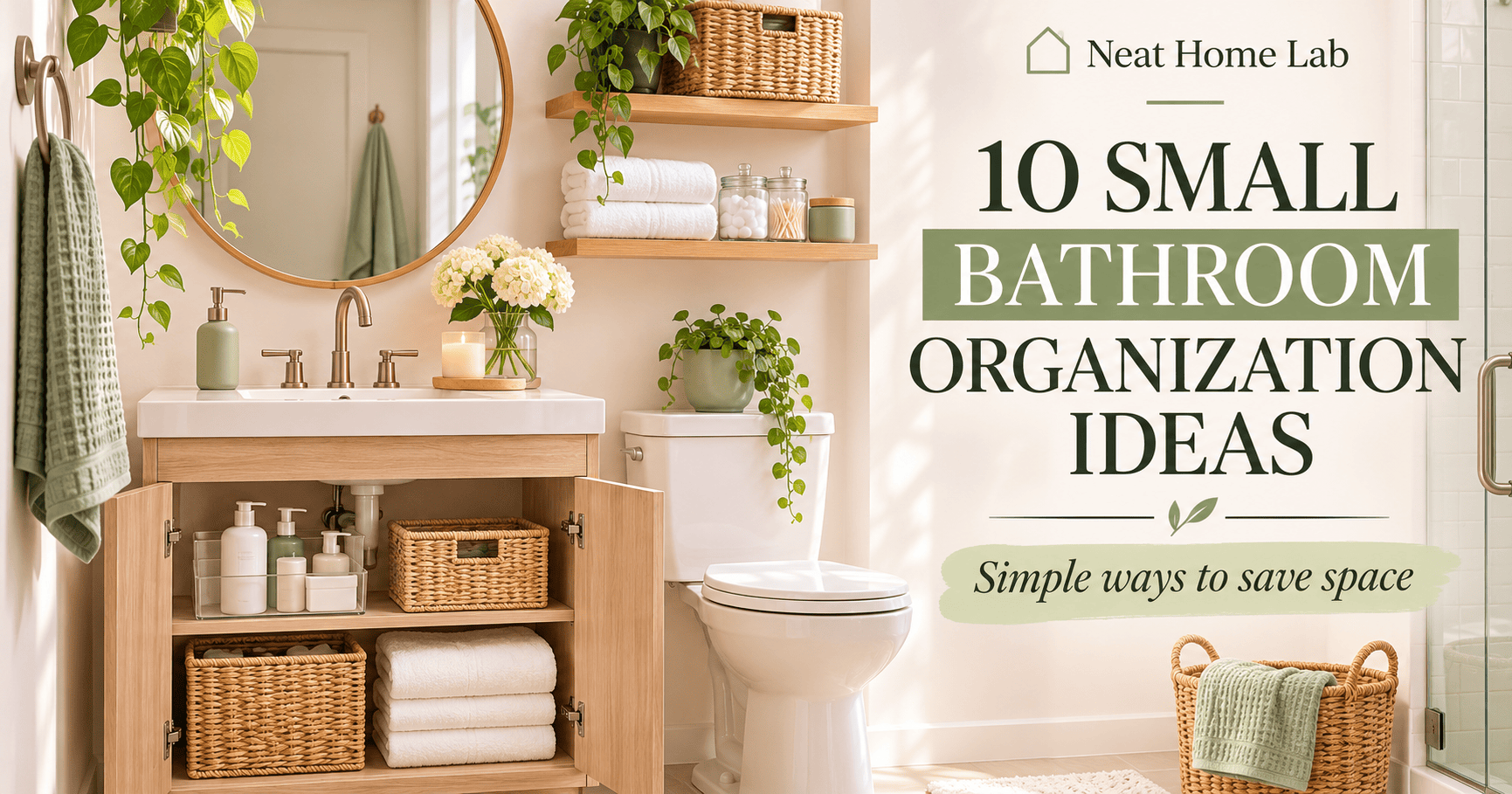
Start by identifying the area that causes the most frustration. Clearing one counter, improving one drawer, or reorganizing the space under the sink can often make a bigger difference than adding several new organizers at once.
Keep these small bathroom organization ideas handy for your next home organization project.
Before You Begin: Solve One Storage Problem First
- Remove empty, expired, or duplicate products before adding organizers.
- Measure usable width, depth, height, and clearance before buying storage.
- Keep frequently used items easier to reach than backup supplies.
- Use vertical and under-sink space without blocking doors, drawers, plumbing, or walkways.
- Test one organization change before buying several matching containers.
If you want a broader room-by-room plan before choosing individual storage ideas, see our small bathroom organization guide for counters, cabinets, under-sink storage, towels, toiletries, doors, walls, renters, and other tight-space bathroom problems.
10 Practical Small Bathroom Organization Ideas
1. Clear the Counter First
Keep only the products you use regularly on the vanity. Move backup toiletries, occasional treatments, and less-used accessories into drawers, cabinets, or another suitable storage area. For a more detailed approach, see our small bathroom counter organization ideas.
2. Create One Zone for Everyday Products
If several items need to remain on the counter, group them into one defined area instead of spreading them across the entire vanity. A small tray or a container you already own can make the space easier to maintain.
3. Use the Inside of Cabinet Doors
The inside of a cabinet door can hold lightweight everyday items such as hair accessories, small brushes, or selected cleaning tools. This can free shelf and drawer space without adding furniture.
4. Make Under-Sink Storage Easier to Use
Bathroom plumbing often divides the cabinet into awkward sections. Instead of trying to fill every inch, create a few accessible zones around pipes and valves for toiletries, cleaning supplies, or backup products. Our guide to the best under-sink organizers for small bathrooms compares practical options and fit considerations.
5. Use Removable Bins in Deep Cabinets
Grouping similar items into removable bins can make the back of a deep cabinet easier to reach. Instead of moving several individual bottles, you can pull out one category at a time.
6. Go Vertical With Narrow Storage
A tall, narrow shelf or rolling cart can add storage beside a vanity, toilet, or unused wall section without taking up as much floor space as a wide cabinet.
7. Give Drawers Clear Categories
Separate dental care, grooming products, hair accessories, and other small items instead of allowing everything to mix together. A clear category system makes it easier to find items and return them after use.
8. Create a Simple Linen System
Group bath towels, hand towels, and washcloths by type. Keep the towels used most often at the easiest-to-reach level and move extra sets higher or to another storage area if space is limited. If you store spare linens elsewhere, our small linen closet organization guide can help.
9. Use the Back of the Door When Needed
An over-the-door organizer can add storage without using valuable floor space. It may be useful for lightweight toiletries, accessories, or other small bathroom supplies when cabinet space is limited.
10. Separate Backup Supplies From Daily-Use Items
Extra soap, toilet paper, toiletries, and unopened products do not need to occupy the most accessible storage locations. Keeping backups in one defined area prevents everyday drawers and cabinets from becoming overcrowded.
Which Storage Option Fits Your Bathroom Problem?
| Problem | Option to Consider | When to Skip It |
|---|---|---|
| Cluttered vanity counter | Small tray or defined daily-use zone | Skip it if the tray would remove too much usable counter space. |
| Unused space around plumbing | Under-sink organizer or removable bins | Skip it if the organizer blocks pipes, valves, hinges, or maintenance access. |
| Very little floor space | Narrow vertical shelf or cart | Skip it if the unit would obstruct a doorway, drawer, walkway, outlet, or fixture. |
| Small products mixed together | Drawer dividers or small bins | Skip them if the drawer first needs fewer products rather than more compartments. |
| No available cabinet space | Over-the-door storage | Skip it if the door cannot open and close freely after installation. |
Bathroom Organizer Buying Checklist
Before purchasing an organizer, measure the exact area where it will be used. In a small bathroom, even a small mismatch in width, depth, height, or clearance can make the space harder to use.
- Under-sink organizers
- Narrow rolling carts or shelves
- Over-the-door storage
- Lightweight bathroom hooks
- Stackable or removable bins
- Drawer organizers
Affiliate disclosure: As an Amazon Associate I earn from qualifying purchases. The Amazon link below is a paid affiliate link.
Compare Under-Sink Bathroom Organizers
An under-sink organizer may help when plumbing leaves unused vertical space and you want clearer zones for personal-care items or cleaning supplies.
Consider one if: You have enough clearance around the plumbing and want stored items to be easier to see and remove.
Choose another option if: The cabinet opening is narrow, plumbing occupies most of the usable area, or a fixed organizer would make pipes and valves difficult to access.
- Measure around pipes and valves.
- Check the usable opening between cabinet hinges.
- Compare organizer height with the clearance below the sink basin.
- Review the current listing for dimensions, materials, installation requirements, seller information, price, and return terms.
View on Amazon(paid link)
This link opens Amazon search results rather than one tested or ranked product. Review the exact listing and specifications before ordering.
A Simple Weekly Bathroom Reset
Return everyday products to their assigned zones, remove empty packaging, put backup supplies away, and clear anything that has collected on the vanity. If the same item repeatedly ends up in the wrong place, reconsider its storage location before buying another container.
Frequently Asked Questions
How do I organize a tiny bathroom with no cabinets?
Use available vertical space, the back of the door, narrow storage, and clearly defined zones for everyday items. If possible, keep backup products elsewhere so limited bathroom storage remains focused on what you use regularly.
What should go under the bathroom sink?
Use the space for suitable toiletries, backup products, or cleaning supplies that fit safely around the plumbing. Group similar items into removable bins and keep pipes and valves accessible.
How can I organize a small bathroom without buying anything?
Remove expired and duplicate products, clear the counter, group items by routine, move occasional supplies away from the most accessible areas, and reuse containers you already own to test storage zones.
Are open shelves useful in a small bathroom?
They can be useful when wall space is available and the shelves do not interfere with normal movement. Keep the amount stored on them limited so they remain practical and easy to clean.
What should I measure before buying a bathroom organizer?
Measure usable width, depth, and height. Also check cabinet openings, hinges, plumbing, baseboards, door swing, drawer clearance, and the space needed to insert and remove stored items.
These suggestions are intended to help you compare bathroom storage approaches based on the space you have. This article does not claim hands-on product testing or identify an overall winning product. Always verify current dimensions, materials, compatibility, installation requirements, seller information, price, and return terms before purchasing.