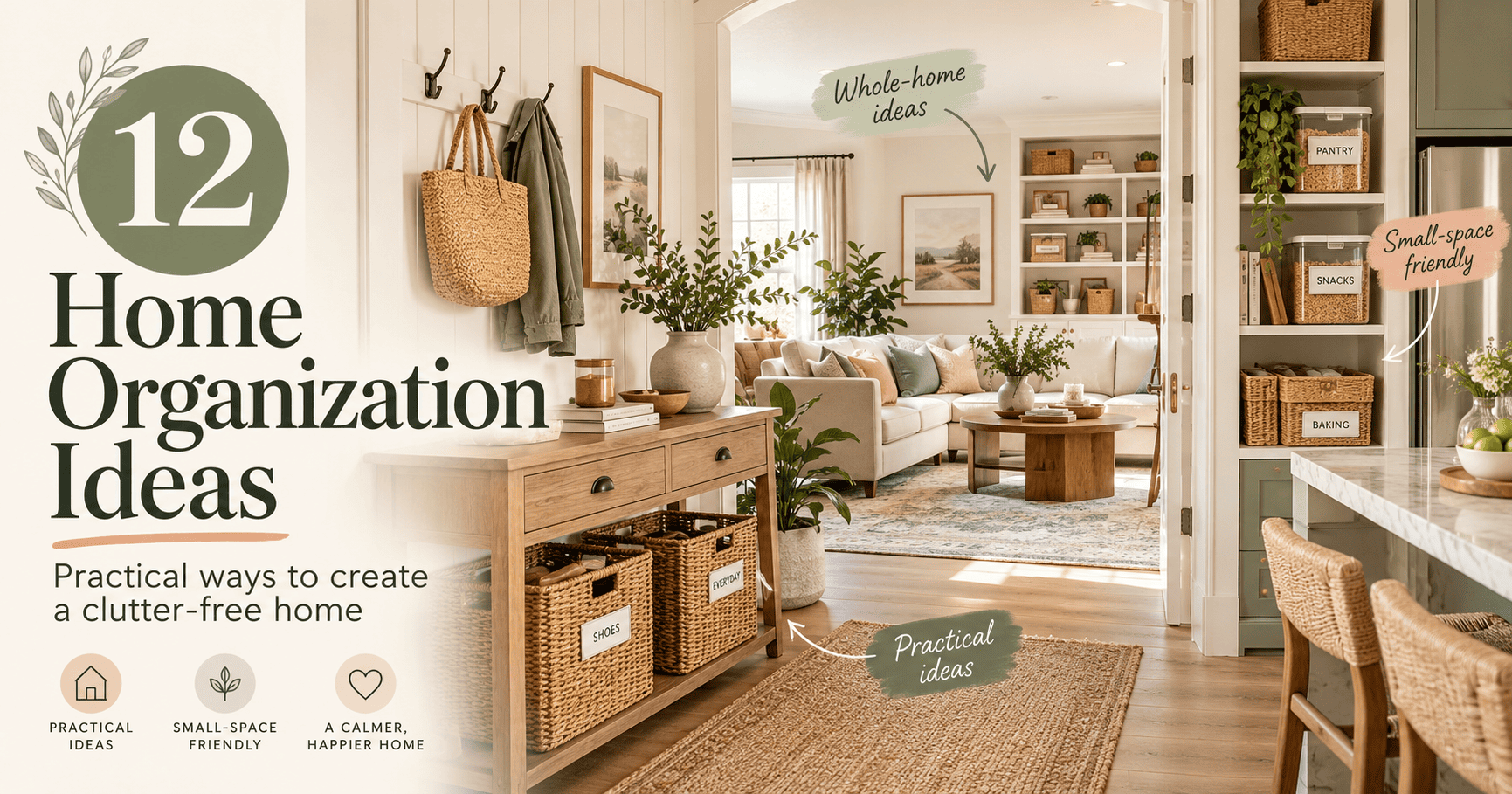
A clutter-free home is easier to maintain when organization follows the way your household actually lives. These home organization ideas focus on simple zones, visible routines and storage solutions that reduce daily friction instead of creating more work.
As an Amazon Associate I earn from qualifying purchases. This article contains a paid Amazon link.
Keep this page handy for your next home organization or shopping project.
12 practical home organization ideas
1. Start with high-traffic clutter
Begin with the places where clutter naturally lands: the entryway, kitchen counter, bathroom vanity, coffee table and laundry area. Solving these locations first creates a noticeable improvement without requiring a whole-house makeover.
Ask first: What keeps appearing here, why does it land here and what nearby storage location would make putting it away easier?
2. Give everyday items a landing zone
Keys, mail, bags, shoes, chargers and small accessories need easy landing zones. If storage is too far away or difficult to access, items will return to the nearest flat surface.
Try this: Use a small tray near the entrance, a simple hook system or a mail sorter for items that arrive home with you.
3. Organize by frequency of use
Store everyday items at eye level or within easy reach. Put occasional-use items higher up or farther back. Seasonal items can occupy the least convenient storage locations.
Check first: Do not give prime storage space to items used only a few times each year.
4. Use bins without hiding everything
Bins work best when each one has a clear category. Instead of a container labeled “miscellaneous,” use categories such as cables, batteries, gift supplies, cleaning cloths or pet accessories.
Before buying: Measure the shelf and choose a bin that can be removed comfortably when full.
5. Create a 10-minute reset
Choose one short reset each evening. Return loose items to their zones, clear one surface and prepare the most-used area for the next morning. A small routine is more sustainable than a large weekend decluttering project.
6. Create one place for incoming paper
Mail, school papers, receipts and forms quickly spread across several rooms. Give incoming paper one temporary location and schedule a regular time to sort, file, recycle or act on it.
Keep it manageable: The container should limit how much paper can accumulate, not become permanent storage.
7. Store cleaning supplies near the task
Keep frequently used cleaning supplies close to the room or surface where they are needed, while following all product safety instructions. This makes short cleaning tasks easier to complete.
Safety first: Keep household chemicals secured and out of reach of children and pets.
8. Use vertical space carefully
Hooks, wall rails and shelf risers can use space above a surface without occupying additional floor area. Add vertical storage only when it keeps items accessible and does not make the room feel crowded.
Before installing: Check the wall fixing, weight limit, door swing and nearby electrical or plumbing lines.
9. Keep a donation container
Use one small container for usable items your household no longer needs. When it is full, move the contents to the appropriate donation location instead of starting another container.
10. Rotate seasonal items
Holiday decorations, seasonal clothing and occasional equipment do not need the easiest storage locations throughout the year. Rotate them into less accessible spaces when they are not in use.
Label clearly: Include the category and season so you do not need to open every container later.
11. Add labels after testing the system
Test a new storage location before creating permanent labels. If household members naturally return items to that location, a label can help maintain the system.
Avoid over-labeling: Broad categories are easier to maintain when products or routines change.
12. Review one small zone each week
Choose one drawer, shelf or surface during the weekly reset. Remove items that no longer belong there and adjust the storage location if the same clutter repeatedly returns.
Organization products worth comparing
Smart organization shopping list
- Entryway hooks and trays
- Drawer dividers
- Stackable closet bins
- Under-sink organizers
- Label makers and storage labels
When shopping, compare dimensions, materials, access and whether the product can be adjusted. Storage products should make an existing routine easier rather than create a new routine you will not maintain.
Adjustable drawer dividers
Consider them if: Small items repeatedly become mixed together and the drawer needs flexible sections.
Choose another option if: The drawer needs fewer items rather than additional compartments.
- Measure the usable internal width, length and height.
- Check the divider’s adjustment range.
- Review the contact surface and installation method.
- Confirm that the drawer can still close comfortably.
View on Amazon(paid link)
This link opens Amazon search results, not one tested or ranked product. Verify the exact model, dimensions, seller, current price and return terms before ordering.
Frequently asked questions
What is the easiest room to organize first?
How do I organize without buying lots of products?
How do I keep my home organized?
Treat the product suggestions as categories to compare. Always verify the current Amazon listing, dimensions, materials, compatibility, price and customer information before purchasing.