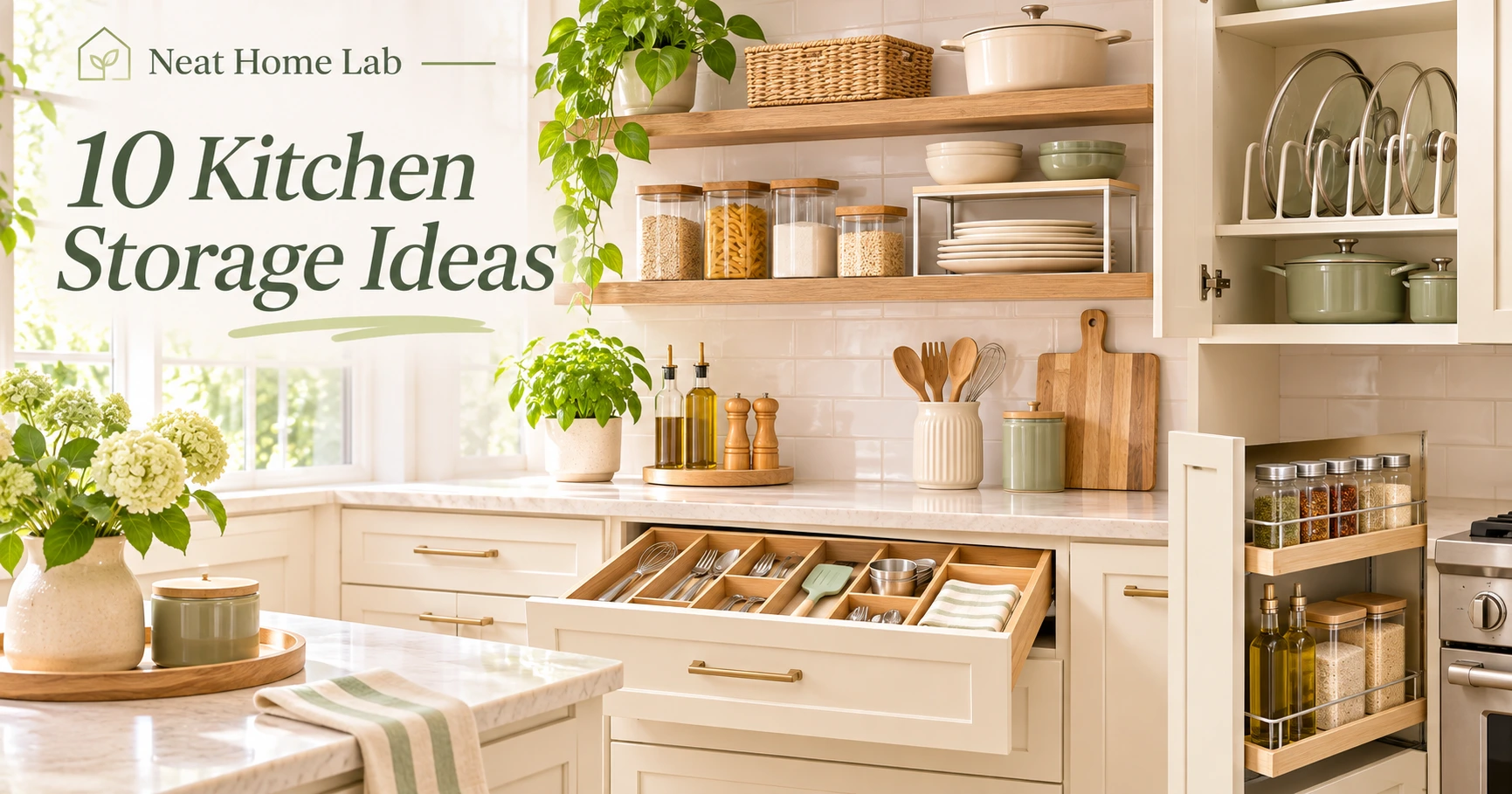
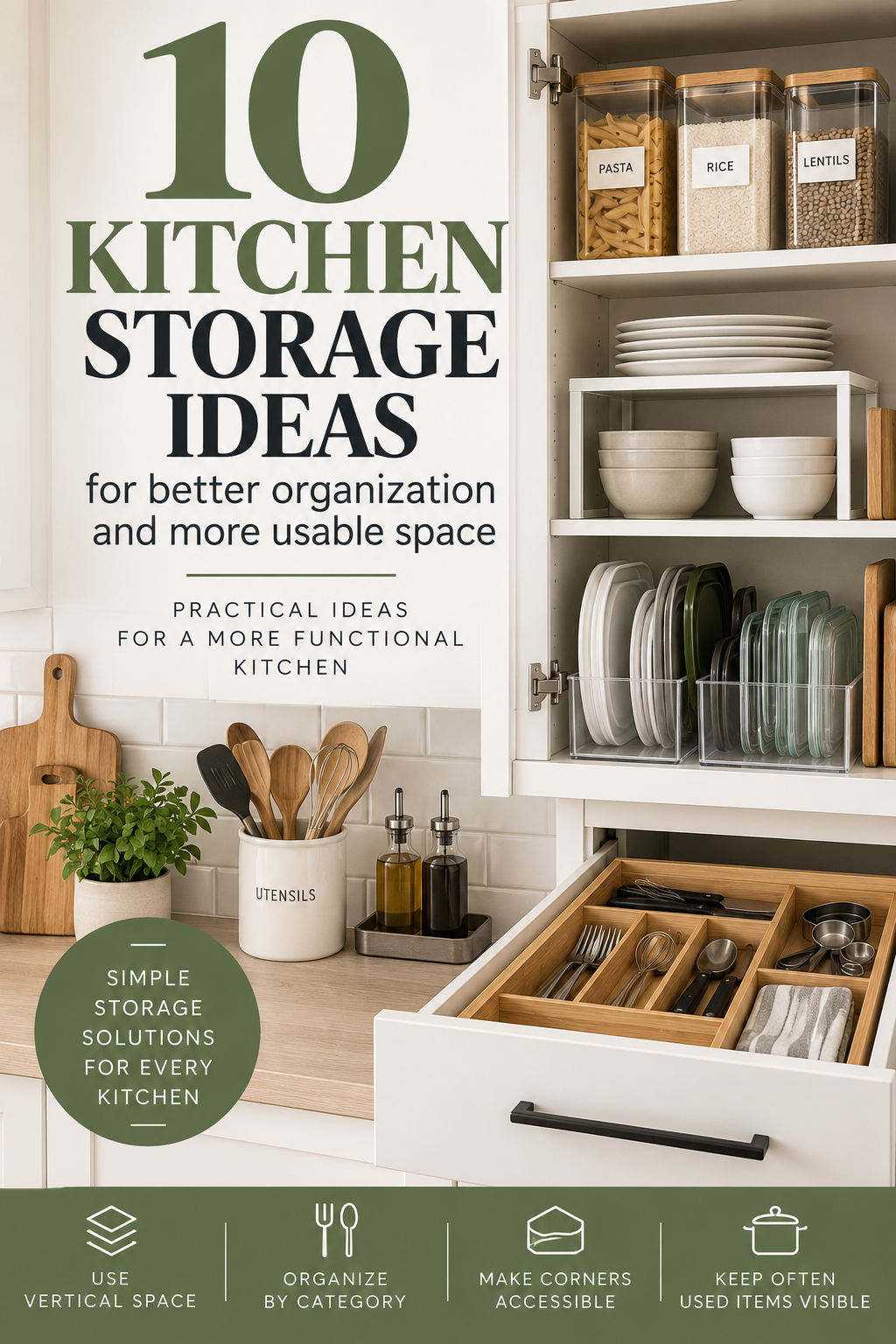
Kitchen storage improves when you stop treating every cabinet and drawer as one large box. Dividing storage into useful zones, taking advantage of vertical space, and making deep areas easier to reach can create more usable capacity without remodeling your kitchen.
These 10 kitchen storage ideas focus on practical changes you can make with the space you already have. Start with the areas that cause the most frustration, then add organizers only when they solve a specific problem.
Keep these kitchen storage ideas handy for your next cabinet, drawer, or kitchen organization project.
Before You Begin: Find the Storage Problem First
- Remove items you no longer use before adding more storage.
- Keep everyday items in the easiest-to-reach locations.
- Use vertical space only when items remain visible and accessible.
- Measure cabinets and drawers before choosing organizers.
- Check door, hinge, shelf, plumbing, and appliance clearance where relevant.
10 Kitchen Storage Ideas for Better Organization and More Usable Space
1. Use Cabinet Space Vertically
Tall cabinet shelves often leave unused space above plates, mugs, cans, or food containers. Shelf risers can create separate levels so you can use more of the available height without stacking everything into one difficult-to-access pile.
2. Improve Drawer Categories
Group utensils and small kitchen tools by task and frequency of use. Keeping cooking utensils, measuring tools, serving pieces, and other categories separate makes it easier to find what you need without searching through the entire drawer.
3. Make Corner Cabinets Accessible
Corner cabinets can provide useful storage, but items placed at the back are easy to forget. A turntable, removable bin, or compatible pull-out system may make deep areas easier to see and reach.
4. Store Lids Separately
Food-container lids and cookware lids often create disorder because they do not stack as neatly as the containers or pots they belong to. Storing lids upright in a defined section can make individual pieces easier to see and remove. See our pots and pans organization guide for more cookware-specific storage ideas.
5. Create a Baking Zone
Keep frequently used baking ingredients, measuring tools, baking trays, and related accessories near one another when your kitchen layout allows it. Organizing around a task can reduce the number of cabinets and drawers you need to open while cooking.
6. Make Deep Cabinets Easier to Reach
Deep cabinets can hide smaller products behind larger ones. Instead of filling the cabinet from front to back with unrelated items, group similar products together so you know what is stored behind the first row. For a more detailed approach, see our guide to organizing deep kitchen cabinets.
7. Use Pull-Out Storage Where It Solves an Access Problem
A pull-out organizer can make the back of a lower cabinet easier to reach, particularly when bending and searching through several rows of items is inconvenient. However, the organizer needs to match the actual cabinet construction.
8. Store Similar Food Containers Together
Food-storage containers are easier to manage when similar shapes and sizes stay together. Nest compatible containers when practical and give lids their own visible section rather than mixing everything into one pile.
9. Keep Everyday Items in the Most Accessible Zones
Prime kitchen storage should generally be reserved for the items you use most often. Everyday dishes, glasses, cooking tools, and frequently used ingredients are easier to manage when they are not hidden behind occasional equipment.
10. Leave Some Storage Space Open
Cabinets and drawers packed completely full are difficult to maintain. Leaving a little open space makes it easier to return items to their proper locations and gives you flexibility when groceries or new kitchen items come into the home.
Choose the Right Kitchen Storage Solution
| Storage Problem | Option to Consider | Check Before Using It |
|---|---|---|
| Unused vertical cabinet space | Shelf riser | Measure width, depth, height, and item clearance. |
| Small tools spread across drawers | Drawer dividers | Measure the inside dimensions and drawer height. |
| Corner items are difficult to reach | Turntable or compatible pull-out | Check cabinet geometry, opening, hinges, and rotation clearance. |
| Lids create unstable stacks | Vertical lid organizer | Measure lid sizes and available cabinet or drawer height. |
| Back of lower cabinet is inaccessible | Pull-out organizer | Confirm interior dimensions and installation compatibility. |
Kitchen Storage Buying Checklist
Before purchasing an organizer, identify the exact problem it needs to solve. A useful kitchen storage product should improve access, visibility, or usable space rather than simply adding another layer of containers.
- Cabinet shelf risers
- Drawer dividers
- Lid organizers
- Turntables
- Pull-out cabinet organizers
- Measure usable width, depth, and height.
- Measure the cabinet or drawer opening separately when necessary.
- Check doors, hinges, shelves, plumbing, and other obstructions.
- Consider how frequently you need to access the stored items.
- Review materials, stability, cleaning instructions, and assembly requirements.
- For installed pull-outs, confirm compatibility with your cabinet construction.
Affiliate disclosure: As an Amazon Associate I earn from qualifying purchases. The Amazon link below is a paid affiliate link.
Compare Kitchen Cabinet Shelf Risers
Cabinet shelf risers can create an additional storage level for plates, bowls, mugs, cans, and other relatively short items when a cabinet has unused vertical space.
Consider them if: Your cabinet shelves are tall enough to create another useful level and stacked items are currently difficult to see or remove.
Skip them if: Your cabinet has limited vertical clearance or adding another level would make everyday items harder to access.
- Measure the available cabinet width, depth, and height.
- Compare the riser dimensions with the items you plan to store.
- Check stability, materials, assembly requirements, and cleaning instructions.
- Verify the current Amazon listing and product specifications before purchasing.
View on Amazon(paid link)
This link opens Amazon search results rather than one tested or ranked product. Check the exact listing, dimensions, materials, current price, seller information, and return terms before ordering.
A Simple Kitchen Storage Reset
Return frequently used items to their assigned zones, match food containers with their lids, remove objects that belong elsewhere, and check whether anything repeatedly becomes difficult to reach. Small adjustments to an existing system can often work better than adding more organizers.
Frequently Asked Questions
How can I get more kitchen storage without remodeling?
Use existing cabinet height more efficiently, improve drawer categories, make deep storage easier to access, move rarely used items away from prime storage areas, and organize around everyday kitchen tasks.
How can I organize kitchen cabinets without buying anything?
Remove unused items, group similar products together, move everyday items to accessible shelves, match food containers with their lids, and reorganize cabinets according to how frequently each item is used.
What kitchen organizer should I buy first?
Start with the organizer that solves the storage problem you encounter most frequently. Measure the space first and make sure reorganizing or removing unnecessary items cannot solve the problem without a purchase.
How do I make deep kitchen cabinets easier to organize?
Keep similar items together, avoid hiding small products behind unrelated large items, and consider removable bins, turntables, or compatible pull-out storage when they improve access to the back of the cabinet.
What should I measure before buying a cabinet organizer?
Measure usable interior width, depth, and height as well as the cabinet opening. Check hinges, doors, shelves, frames, plumbing, and other obstructions that could affect fit or movement.
These ideas are intended to help improve kitchen storage using solutions appropriate for your own cabinets, drawers, and routine. The Amazon suggestion is a product category to compare and does not represent hands-on testing or a ranked winner. Always verify the current listing, dimensions, materials, compatibility, installation requirements, seller information, price, and return terms before purchasing.