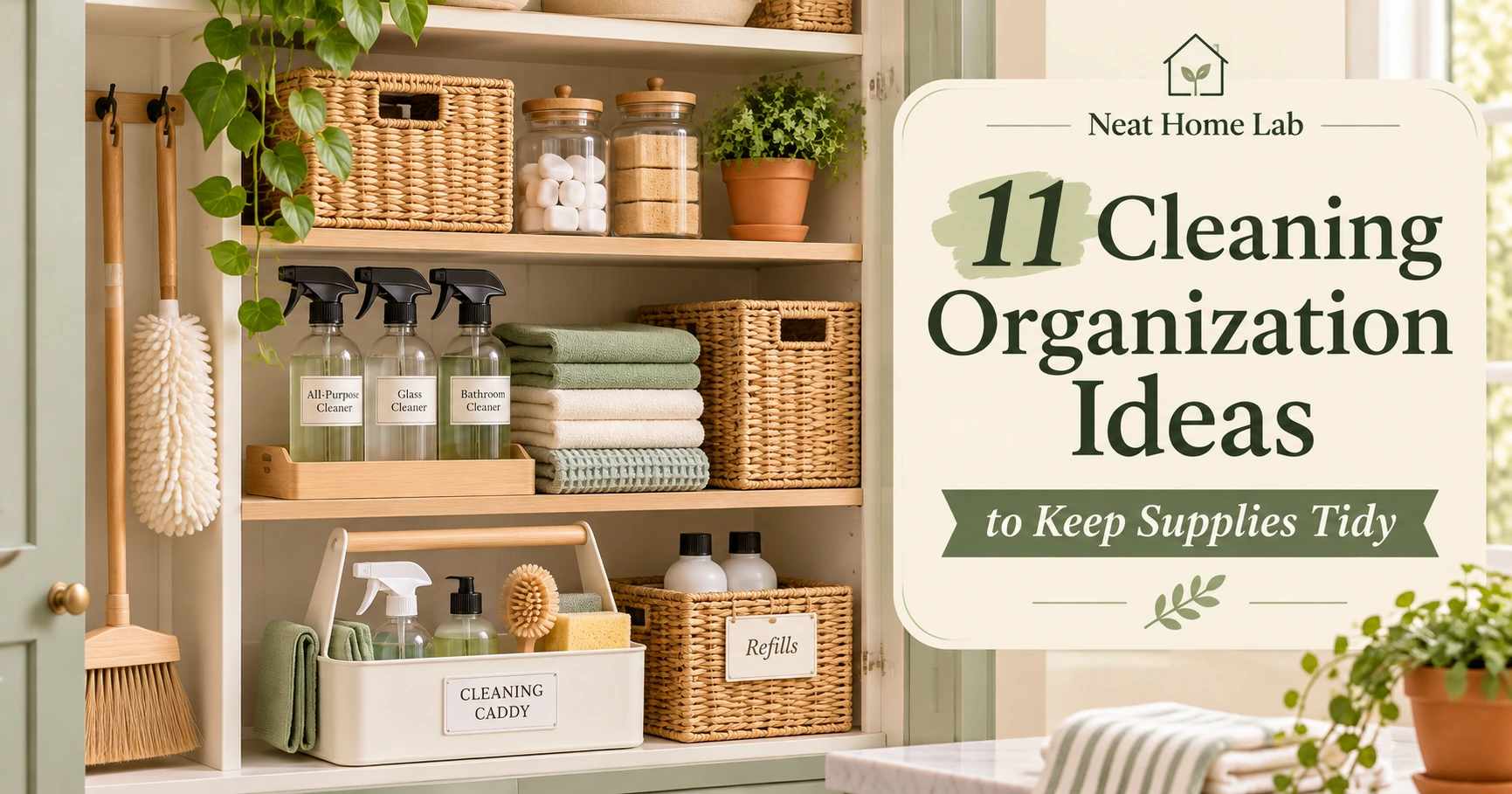
Cleaning becomes easier when supplies are organized around the rooms and tasks where they are used. These 11 cleaning organization ideas focus on accessibility, safer storage, and simple systems that can make everyday cleaning easier to manage.
You do not need a large utility closet or a complete storage makeover. Start by grouping what you already own, remove products you no longer use, and add organizers only when they solve a specific access or storage problem.
Keep these cleaning organization ideas handy for your next home reset or cleaning-supply storage project.
Before You Begin: Organize for Access and Safety
- Group supplies by task or location.
- Keep frequently used products easy to reach when appropriate.
- Follow each product label for storage and handling instructions.
- Keep products away from children and pets when required by the label.
- Measure cabinets, shelves, carts, and under-sink areas before buying organizers.
- Never mix cleaning products unless the manufacturer specifically instructs you to do so.
11 Cleaning Organization Ideas for a More Organized Home
1. Create a Central Cleaning Station
Keep frequently used cleaning supplies together in one practical location so you do not have to search through several cabinets before starting a routine. Specialized products can remain stored separately if they are only needed occasionally.
Choose one existing cabinet, shelf, or utility area and group your most-used supplies there before purchasing new storage products.
2. Organize Under the Sink
Under-sink areas can become difficult to manage because plumbing reduces the usable space. Group cloths, brushes, and suitable supplies in small zones rather than filling every opening with unrelated items. For product dimensions and layout examples, see our guide to under-sink organizers for small bathrooms.
Measure around pipes, drains, disposals, valves, and cabinet doors before buying an organizer. Store cleaning products according to their labels and never combine chemicals unless specifically directed by the manufacturer.
3. Give Cleaning Cloths a Simple System
Separate clean cloths by use or room so they are easy to find when you need them. A small basket, drawer section, or shelf can keep clean cloths separate from items waiting to be washed.
You do not need a complicated labeling system. A few broad categories are usually easier to maintain than many highly specific groups.
4. Use Door and Wall Space for Lightweight Tools
Hooks or narrow wall-mounted organizers can create storage for lightweight brushes, dusters, or compatible tools when cabinet space is limited.
Check the mounting method, surface type, weight capacity, door clearance, and the manufacturer’s installation instructions.
5. Create a Weekly Cleaning Caddy
A portable caddy can keep a small group of commonly used products together for a weekly cleaning routine. This can reduce repeated trips back to the main storage area.
Include only the supplies you actually carry from room to room. An overloaded caddy can become inconvenient and harder to store.
6. Separate Everyday and Specialty Products
Products used regularly do not need to compete for space with occasional specialty cleaners. Keeping the two groups separate can make everyday supplies easier to see and reduce unnecessary clutter.
Storage location should always follow the instructions and warnings on the individual product label.
7. Keep Brushes and Small Tools Visible
Small brushes, scrubbers, gloves, and similar accessories can disappear at the bottom of a deep bin. Give them a defined section so they are easy to find and allow used tools to dry appropriately before enclosed storage when required.
Use an existing small container or divided drawer to test whether separating these tools improves your routine.
8. Use a Narrow Utility Cart Only Where It Fits
A slim utility cart can create accessible storage in a laundry area, utility room, or another appropriate space when cabinets are limited.
Measure the full width, depth, and height of the available area. Leave enough clearance for doors, appliances, walkways, and safe access.
9. Create a Refill and Backup Zone
If you keep backup cleaning products, store duplicates together so you can see what you already own before purchasing more.
Check the backup zone before shopping. This can reduce duplicate purchases and prevent storage areas from becoming overcrowded.
10. Keep Cleaning Supplies Away From Unrelated Household Items
Whenever practical, avoid mixing cleaning products with food, personal-care items, or unrelated household supplies. Clear storage zones make it easier to understand what belongs where.
Always follow the product label for required storage conditions and precautions, especially around children, pets, heat, and food-storage areas.
11. Create a Simple Restock and Reset Routine
Return supplies to their assigned storage areas after cleaning, remove empty containers when appropriate, wash reusable cloths, and check what needs replacement before your next cleaning day.
A simple storage system that you can reset quickly is usually easier to maintain than a highly detailed setup with too many separate containers.
Choose the Right Cleaning Storage Solution
| Storage Problem | Option to Consider | Check Before Using It |
|---|---|---|
| Supplies are stored in several locations | Central cleaning station | Make sure the location follows product storage instructions. |
| You carry the same supplies between rooms | Handled cleaning caddy | Choose a manageable size and avoid overloading it. |
| Under-sink storage is difficult to use | Small bins or compatible organizers | Measure around plumbing and cabinet obstructions. |
| Brushes and tools are scattered | Hooks, bins, or defined drawer sections | Check mounting requirements and tool-storage needs. |
| Very little cabinet space | Narrow utility cart | Measure floor space and maintain clear walkways. |
Cleaning Storage Buying Checklist
Before purchasing a cleaning organizer, identify the exact problem it needs to solve. Storage should improve access and make the routine easier without interfering with the storage instructions for the products themselves.
- Handled cleaning caddies
- Under-sink bins
- Microfiber cloth storage baskets
- Wall hooks
- Narrow utility carts
- Measure the available width, depth, and height.
- Check plumbing, hinges, doors, shelves, and nearby appliances.
- Consider whether the organizer will be carried or remain stationary.
- Check stability, handles, wheels, drainage, or ventilation where relevant.
- Review materials, cleaning instructions, assembly, and intended use.
- Make sure product storage remains consistent with each manufacturer’s label.
Affiliate disclosure: As an Amazon Associate I earn from qualifying purchases. The Amazon link below is a paid affiliate link.
Compare Handled Cleaning Caddies
A portable cleaning caddy can keep a small set of frequently used supplies together and make it easier to carry them between suitable areas of the home.
Consider one if: You regularly use the same small group of cleaning tools and products in several rooms.
Skip it if: Your cleaning products need to remain stored in different locations or the caddy would become too heavy or overcrowded to use comfortably.
- Compare the caddy dimensions with your available storage space.
- Check handle design and overall stability.
- Review materials and cleaning instructions.
- Make sure the size suits the products you actually plan to carry.
- Verify the current Amazon listing and specifications before purchasing.
View on Amazon(paid link)
This link opens Amazon search results rather than one tested or ranked product. Check the exact listing, dimensions, materials, current price, seller information, and return terms before ordering.
A Simple Cleaning-Supply Reset Routine
Return products and tools to their assigned storage areas after use, separate cloths that need washing, remove empty containers when appropriate, and check your backup supplies before shopping. Keeping the system easy to reset can prevent storage areas from becoming cluttered again. For a broader reset, explore our home organization ideas.
Frequently Asked Questions
How should I organize cleaning supplies?
Group supplies by task or location, keep frequently used items accessible when appropriate, separate specialty products, and follow the storage instructions and warnings on each product label.
Is a cleaning caddy useful?
A caddy can be useful when you regularly carry the same small set of supplies between rooms. It is less useful if products must remain in different storage locations or the caddy becomes too large to carry comfortably.
How can I organize cleaning supplies without buying anything?
Group similar supplies together, dedicate an existing shelf or cabinet area to everyday products, reuse suitable containers for cloths and tools, and move rarely used products away from the most accessible storage space.
How do I organize cleaning supplies under the sink?
Measure around plumbing first, group compatible items in defined zones, keep tools easy to remove, and store cleaning products according to the directions and warnings on their labels.
What should I measure before buying a cleaning organizer?
Measure usable width, depth, and height as well as cabinet openings, pipes, hinges, doors, shelves, appliances, and any other obstruction that could affect fit or access.
These ideas are intended to help improve cleaning-supply organization using solutions appropriate for your own home and routine. The Amazon suggestion is a product category to compare and does not represent hands-on testing or a ranked winner. Always verify the current listing, dimensions, materials, specifications, seller information, price, and return terms before purchasing. Follow each cleaning product’s label for safe use and storage.