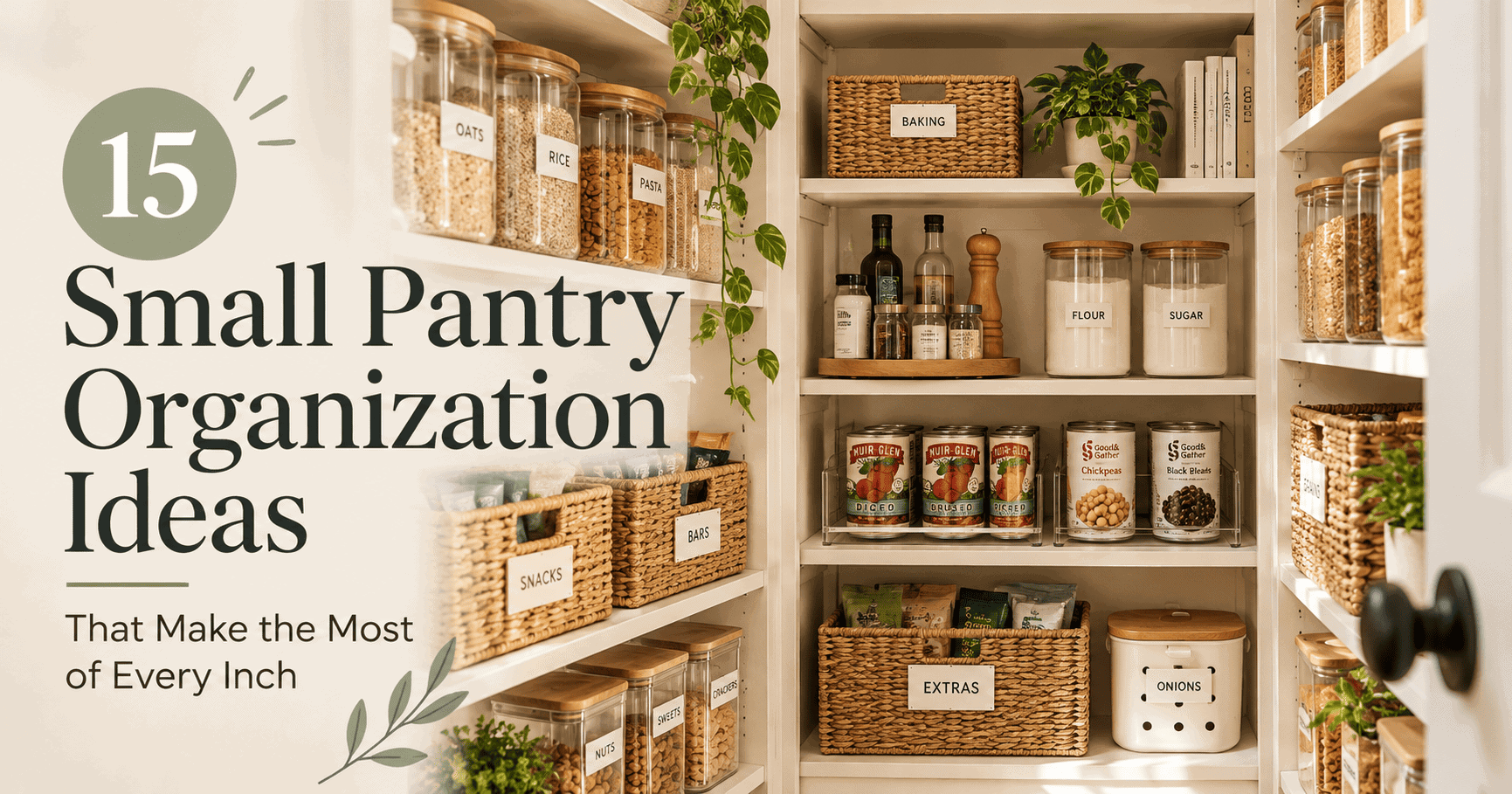
A small pantry can feel crowded even when you are not storing very much. Deep shelves hide ingredients in the back, snacks spread across several areas, tall packages waste vertical space, and duplicate groceries make shelves feel fuller than they really are.
The best small pantry organization ideas make it easier to see what you have, reach what you use, and put groceries away without creating a complicated storage system.
You do not need a walk-in pantry or dozens of matching containers. A few clear zones, better use of shelf height, and smarter placement of everyday foods can make even a narrow pantry much easier to manage.
Keep this guide handy when organizing a pantry closet, small cabinet pantry, narrow shelves, or compact kitchen storage.
- Organize food by how you use it, not only by package shape.
- Use shelf height, door space, and corners before adding more containers.
- Keep everyday foods in the easiest-to-reach zones.
- Use a few repeatable organizer types instead of many mismatched pieces.
- Keep duplicates together in one backstock area.
- Leave some empty space so new groceries have somewhere to go.
Quick Answer: How Do You Organize a Small Pantry?
Start by removing expired, unwanted, or unnecessary duplicate food. Then group what remains into a few practical zones such as breakfast, snacks, baking, canned goods, dinner ingredients, and backstock.
Use bins for loose packages, shelf risers for short cans and jars, turntables for difficult corners, and door storage for lightweight items when the layout allows it.
The best pantry system is one you can reset in a few minutes after grocery shopping.
If pantry storage is only one part of a larger space problem, our small kitchen organization guide covers cabinets, counters, cookware, pantry storage, under-sink areas, and other ways to make a compact kitchen easier to use.
Before You Organize: Measure the Pantry
Small pantry organization becomes much easier when you know the usable dimensions of each shelf. Measure width, depth, and height between shelves. Also note anything that reduces usable space, including hinges, trim, shelf supports, and door clearance.
Measure the Shelf Depth
Deep shelves can hold a lot, but they also create hidden zones. If your pantry shelves are deep, consider a front-and-back arrangement, removable bins, or turntables so items do not disappear behind each other.
Measure the Height Between Shelves
This tells you whether shelf risers, stackable bins, cereal containers, bottles, or other tall items will actually fit. Do not assume every shelf needs the same setup.
Check the Pantry Door
If the inside of the door has usable space, it can become valuable vertical storage. Any door organizer still needs to clear the shelves, handles, and contents when the door closes.
Identify the Problem Zones First
Before buying or rearranging anything, decide what creates the most frustration. Snacks, cans, spices, baking supplies, bottles, and duplicate groceries often need very different solutions.
Measure first and solve one problem at a time. A slightly oversized bin or riser can waste more space than it creates.
15 Small Pantry Organization Ideas
You do not need all 15 ideas. Choose the ones that solve the biggest problems in your pantry and fit the way your household actually uses food.
1. Create Simple Pantry Zones
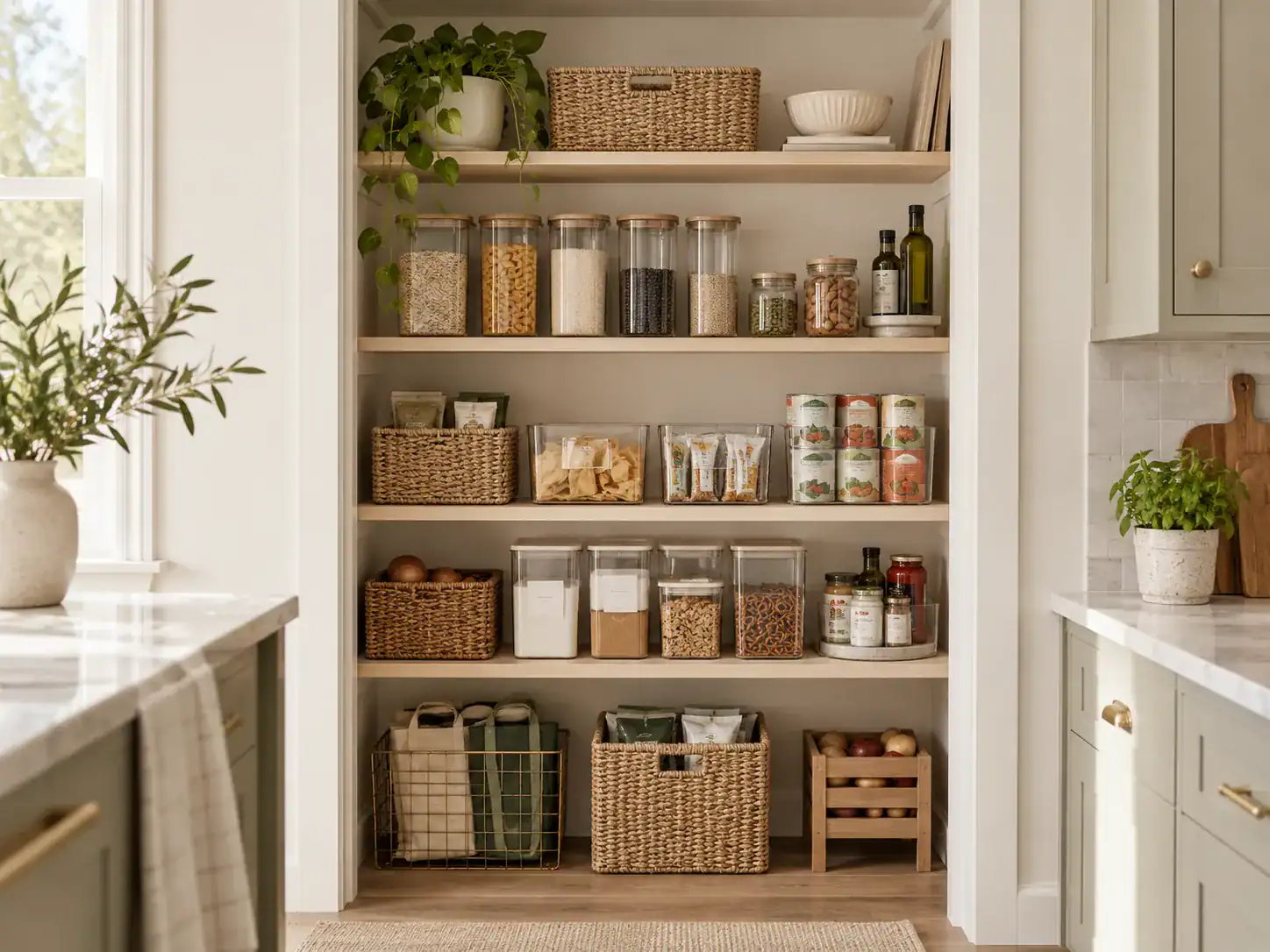
Instead of organizing every shelf by package shape, organize by use. Keep breakfast foods together, group baking ingredients, create one snack zone, and place common dinner staples near each other.
Why it works: Zones reduce searching and make grocery put-away faster because every category already has a home.
2. Use Clear Bins for Loose Packages
Small packages can fall over, spread out, or disappear behind larger items. Clear bins can help contain snack bars, packets, pasta pouches, baking decorations, and similar loose foods.
Why it works: You can pull one category forward instead of moving several products to reach something in the back.
Measure the shelf depth. A bin that is too deep can become another place for food to disappear.
3. Add Shelf Risers for Cans and Jars
If cans or jars sit in one flat row, much of the space above them may go unused. A shelf riser can create a second level and make products behind the first row easier to see.
Best for: Canned vegetables, sauces, short jars, small boxes, and frequently used staples.
4. Put Awkward Corners on a Turntable
Pantry corners are easy to overfill because products at the back become difficult to reach. A turntable can let you rotate the contents instead of unloading the shelf.
Best for: Oils, sauces, nut butters, condiments, jars, and other bottles that fit safely within the available shelf height.
5. Use the Pantry Door for Lightweight Storage
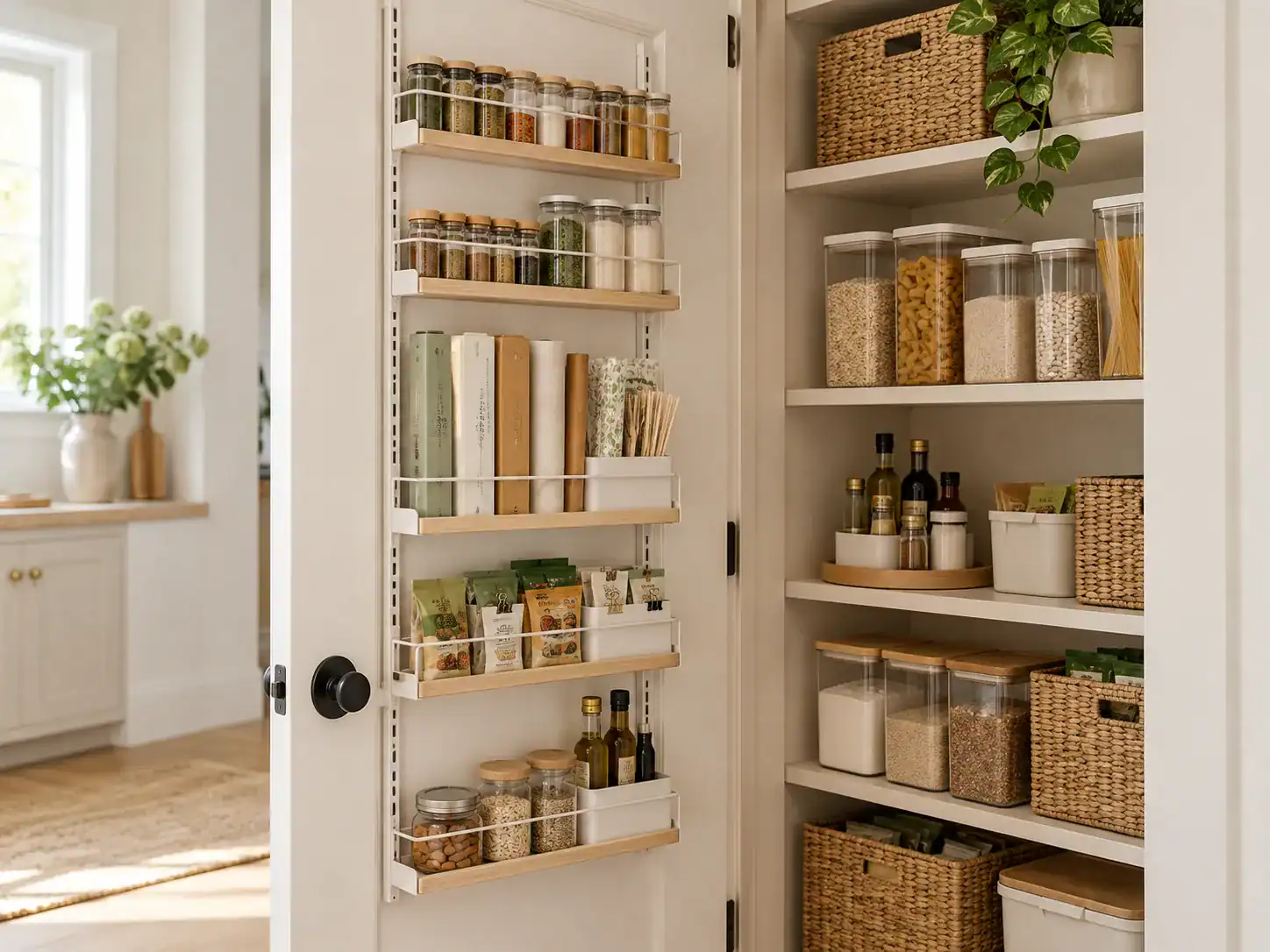
The inside of the pantry door can add storage without taking shelf space. Use it for lighter categories that are easy to grab and compatible with the door organizer you choose.
Good candidates: Wraps, foil, snack packets, seasoning envelopes, reusable bags, or similar lightweight essentials.
Make sure the organizer and its contents will clear the pantry shelves when the door closes.
6. Create a Dedicated Snack Station
Snacks can create visual clutter quickly because the packaging comes in many shapes and sizes. Give the category one shelf or a few defined bins rather than spreading it throughout the pantry.
Why it works: Everyone knows where to look, and you can see when the category is becoming overstocked.
7. Make Breakfast a Grab-and-Go Zone
Group foods used during the same routine. Cereal, oatmeal, coffee, tea, spreads, and other breakfast staples can share one easy-to-reach zone.
Why it works: Organizing by routine can be more practical than separating every food type, especially during busy mornings.
8. Store Baking Supplies Together
Keep flour, sugar, baking powder, extracts, chocolate chips, decorating supplies, and similar ingredients in one section. Smaller baking items can share a bin so they do not scatter across the shelf.
Tip: Keep frequently used ingredients toward the front and occasional supplies behind them or on a less convenient shelf.
9. Use Baskets to Reduce Visual Clutter
Clear bins are useful when visibility matters, while baskets can be helpful for categories that look busy even when organized.
They can work for bulky bags, backup supplies, or other categories where seeing every individual package is not necessary.
Why it works: Repeating a few similar baskets can create a calmer appearance on open pantry shelves.
10. Use Stackable Containers Only Where They Save Space
Stackable containers can use vertical space effectively, but transferring every grocery item into a separate container is not necessary.
Focus on foods you buy regularly and that become easier to store outside the original package.
Possible candidates: Rice, oats, flour, sugar, cereal, pasta, or other dry staples when appropriate for your storage routine.
Keep any expiration, preparation, allergen, or product information you may need from the original packaging.
11. Create a Backstock Zone
Duplicates can make a small pantry feel full very quickly. Instead of mixing unopened extras with everyday food, create one backstock zone on a higher, lower, or less convenient shelf.
Why it works: You can check one location before adding another duplicate to your grocery list.
12. Store Everyday Items at Eye Level
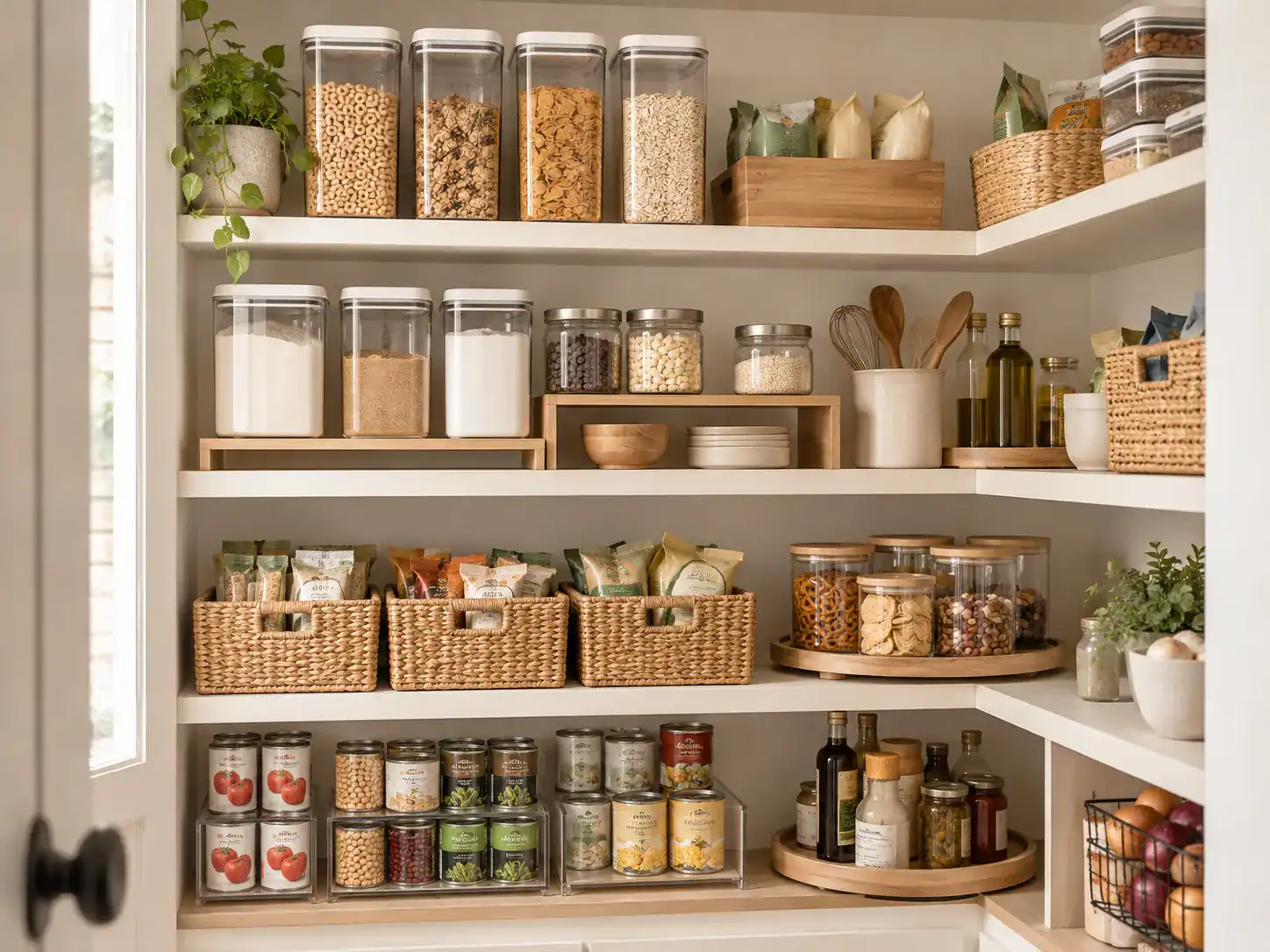
Do not give prime shelf space to ingredients you rarely use. Keep everyday staples in the easiest-to-reach area and move occasional products higher or lower where appropriate.
Simple rule: Frequently used items in the middle, lighter occasional products higher, and heavier products lower when the shelving supports that arrangement.
13. Label Categories, Not Every Single Container
Labels are most helpful when they make the pantry easier to reset. You do not need a label on every jar.
Broad categories such as Snacks, Breakfast, Baking, Dinner, and Backstock can usually adapt better when brands and package sizes change.
14. Use a First-In, First-Out Row for Duplicates
When you have more than one of the same food, place the older package where it is more likely to be used first and newer unopened backups behind it.
Best for: Canned goods, pasta, sauces, cereal, snacks, and other pantry staples you buy regularly.
15. Leave One Small Section Empty
One of the easiest ways to make a pantry system fail is to fill every inch on the first day.
Leave a little room for new groceries, temporary items, or categories that change from week to week.
Why it works: Flexibility prevents one grocery trip from undoing the entire system.
Small Pantry Organization Ideas by Problem
Find the storage problem that sounds familiar and try the simplest solution first.
| Problem | Idea to Try First | Why It Helps |
|---|---|---|
| Items disappear in the back | Removable or pull-forward bins | Brings the category forward |
| Too many cans or jars | Shelf risers | Creates a visible second level |
| Awkward corner | Turntable | Makes back items easier to reach |
| Not enough shelf space | Door storage | Uses an overlooked vertical surface |
| Snack clutter | Dedicated snack station | Contains mixed-size packaging |
| Too many duplicates | Backstock zone | Separates extras from daily-use food |
| Pantry looks visually busy | Repeated baskets or bins | Reduces visual package clutter |
| System never stays organized | Broad category labels | Makes resetting easier |
| New groceries have nowhere to go | Leave open shelf space | Adds flexibility after shopping |
How to Organize a Small Pantry in One Afternoon
Step 1: Empty One Section at a Time
You do not have to empty the entire pantry onto the kitchen floor. Working shelf by shelf can keep the project manageable.
Step 2: Remove Expired or Unwanted Items
Check dates and remove food your household no longer plans to use. Follow appropriate local guidance for donation or disposal.
Step 3: Group Similar Items
Create broad categories such as snacks, breakfast, baking, canned goods, dinner staples, beverages, and backstock.
Step 4: Assign the Easiest Shelves First
Give frequently used categories the easiest-to-reach shelves. Less frequently used or backup items can use higher, lower, or deeper zones.
Step 5: Add Organizers Only Where They Solve a Problem
Use bins for loose packages, risers for short items, turntables for corners, and baskets for visually busy categories. Avoid adding containers simply because there is room for them.
Step 6: Reset After Grocery Day
Put new groceries directly into the correct zones, move older duplicates forward, and return excess products to the backstock area.
Complete the first four steps before purchasing organizers. You may discover that better categories and less duplicate inventory solve much of the problem on their own.
Common Small Pantry Organization Mistakes
Buying Containers Before Measuring
An organizer that is slightly too deep or too tall can waste more space than it saves. Measure the shelf before purchasing anything.
Decanting Everything
Uniform containers can look attractive, but transferring every grocery product adds extra maintenance. Use containers where they improve access, storage, or visibility rather than only for appearance.
Creating Too Many Tiny Categories
If every type of snack or ingredient has its own label, the system can become difficult to maintain. Broader categories are often more flexible.
Overfilling the Pantry
Even good organizers cannot solve too much inventory. Leave enough room to see what you have and put groceries away comfortably.
Ignoring Household Habits
If certain foods are used every day, store them where they are practical to reach. A visually perfect arrangement is not useful if it makes normal routines harder.
Using Deep Bins Without Visibility
Very deep bins can recreate the same problem as deep shelves. If you cannot see or easily pull out the category, products may still become forgotten.
Filling Every Inch of Vertical Space
Stacking can improve capacity, but the system stops being useful if you need to move several containers every time you need one ingredient.
How to Make a Small Pantry Look More Organized
You do not need matching containers everywhere. A pantry can look calmer simply by repeating a few organizer types and reducing visual clutter.
Repeat Two or Three Organizer Types
For example, use clear bins for loose packages, baskets for visually busy categories, and shelf risers for cans and jars.
Keep Labels Simple
Use one label style and short category names. The purpose of labels is to make the system obvious and easy to maintain.
Reduce Packaging Only When It Helps
Removing unnecessary outer packaging can sometimes save space, but keep any important preparation, expiration, allergen, or product information you still need.
Keep the Front Edge of Shelves Clear
A little open space near the front makes the pantry feel less crowded and allows bins or baskets to move more easily.
A Simple Small Pantry Setup to Start With
For many small pantries: start with four to six broad zones, contain loose packages in a few removable bins, use one or two shelf risers for short cans or jars, add a turntable only where a corner is difficult to reach, and reserve one shelf or basket for backstock.
If the pantry still feels crowded after that, reducing duplicate inventory or using suitable door space may help more than adding additional containers.
If you also need to organize deep kitchen cabinets, see our guide to organizing deep kitchen cabinets without wasting space.
Frequently Asked Questions
How do I organize a very small pantry?
Start with a few broad food zones, keep everyday items on the easiest shelves, and use vertical, corner, or door space only where it improves access. Clear bins, shelf risers, and turntables can help when they solve a specific storage problem.
What containers are best for a small pantry?
The best container depends on the problem. Clear bins can work for loose packages, baskets can reduce visual clutter, shelf risers add levels for short items, and stackable containers can be useful for dry goods you store repeatedly.
How can I organize a pantry without buying anything?
Remove expired or unwanted food, group groceries into practical zones, move everyday items to easier shelves, create a separate backstock area, and move older duplicates forward. Those changes alone can make a pantry much easier to use.
Should everything in a pantry be in containers?
No. Containers are most useful when they improve visibility, access, or space efficiency. Original packaging remains practical for many foods.
How do I keep a small pantry organized after grocery shopping?
Put new groceries directly into their assigned zones, move older duplicates forward, place unopened extras in backstock, and avoid creating temporary piles.
How often should I reorganize my pantry?
You should not need frequent full reorganizations if the categories are simple. Short routine resets and occasional checks for expired, duplicated, or unused items are usually easier to maintain.
How do I organize deep pantry shelves?
Use removable bins, a front-and-back arrangement, shelf risers, or turntables depending on the category. The goal is to prevent food at the back from becoming invisible.
What should go on the easiest pantry shelves?
Reserve the most accessible shelves for foods and ingredients used frequently. Occasional items and unopened backups can usually move to less convenient storage zones.
These ideas are intended to help solve common small-pantry problems such as deep shelves, limited vertical space, duplicate groceries, snack clutter, difficult corners, and inconsistent categories. You do not need to purchase organizers to use this guide. Start with decluttering, measuring, zoning, and repositioning what you already have, then add storage tools only where they solve a specific problem.
Final Thoughts
A small pantry does not need dozens of organizers to work well. The biggest improvements usually come from clearer zones, better visibility, smarter use of vertical space, and fewer groceries hiding behind each other.
Start with the problem that frustrates you most, make one section easier to use, and build from there. The best small pantry organization ideas are the ones that make your normal routine simpler rather than creating a system that requires constant maintenance.
Best place to start: create simple zones, contain loose packages, use shelf height more effectively, separate backstock, and leave enough open space for the pantry to handle your next grocery trip.