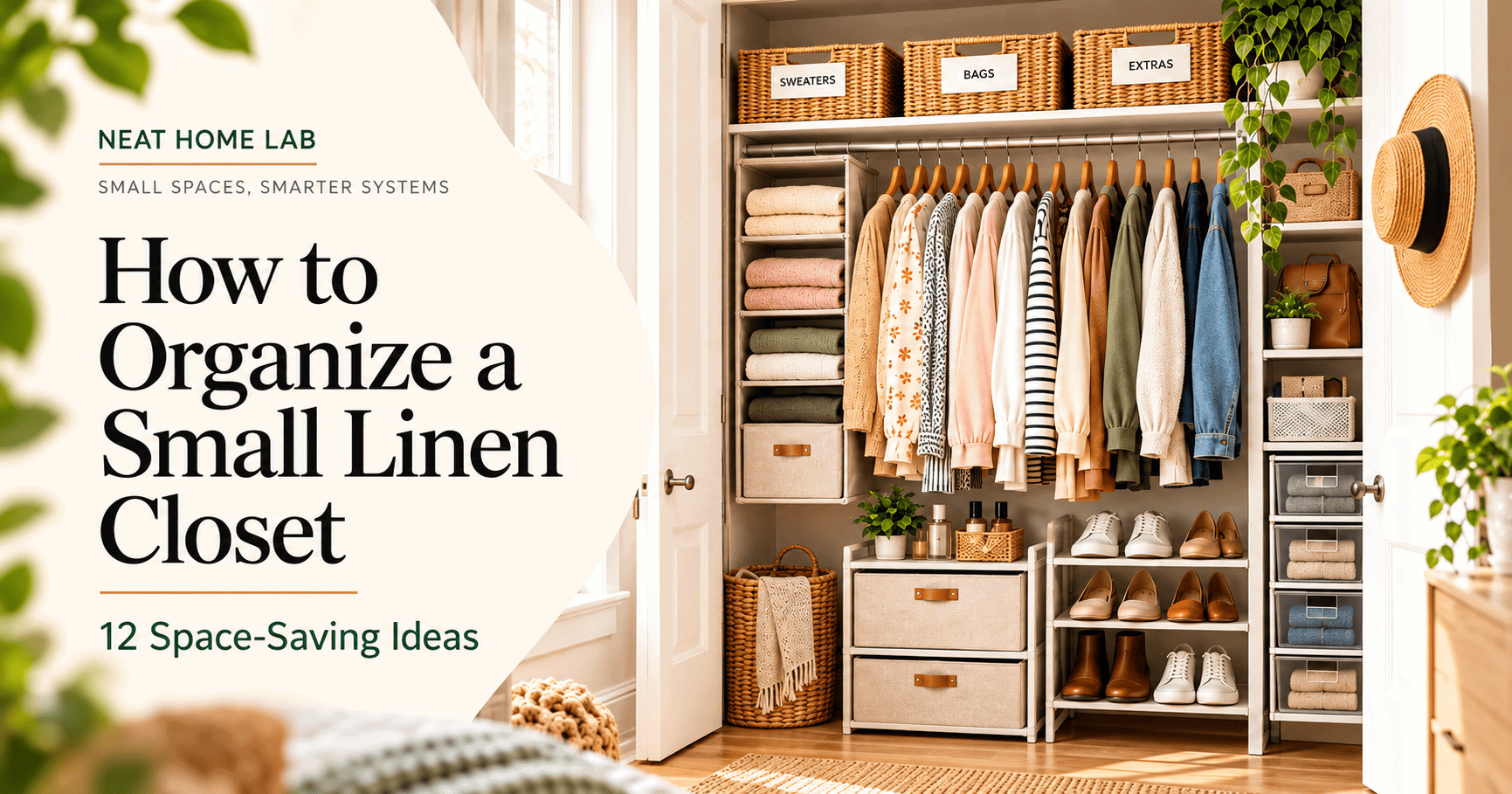
The best closet organizers for small closets help you use hanging space, shelves, doors, drawers, and floor space more efficiently without making the closet harder to access.
Before buying anything, identify the part of the closet that creates the most frustration. A small closet usually works better when each organizer solves one clear problem instead of filling every available inch with storage products.
Keep these small closet organization ideas handy for your next storage or shopping project.
Before You Buy Closet Organizers
- Declutter before measuring the closet.
- Measure usable width, depth, and height.
- Measure hanging clearance below shirts, jackets, and longer garments.
- Check shelf depth, door clearance, baseboards, and closet trim.
- Keep everyday clothing in the easiest-to-reach zones.
- Avoid adding so many organizers that clothes become harder to remove.
10 Closet Organizer Types Worth Comparing for Small Closets
1. Adjustable Closet Shelf Organizers
Adjustable shelf organizers can divide tall shelf space into smaller storage zones. They can work well for folded clothing, handbags, boxes, or other categories that otherwise become large unstable stacks.
Check first:
Measure shelf width, depth, and height and make sure the organizer does not block the hanging rod or closet door.
2. Slim Hangers
Slim hangers can reduce the amount of rod space used by each garment compared with bulkier hanger styles. They can be particularly useful when hanging space is the main limitation.
Check first:
Make sure the hanger shape and surface are appropriate for the clothing you plan to store.
3. Double Hanging Rods
A second hanging level can create additional space for shorter garments such as shirts, skirts, folded pants, or children’s clothing when enough vertical clearance is available.
Skip it if:
You store many long dresses, coats, or other garments that need the full hanging height.
4. Hanging Shelf Organizers
Fabric or structured hanging shelves can create vertical compartments for folded clothing, shoes, bags, accessories, or other lightweight categories without installing permanent shelving.
Check first:
Measure the hanging length and width so the organizer does not consume more rod space than you can afford to lose.
5. Shelf Dividers
Shelf dividers can prevent folded clothing, towels, handbags, or other categories from spreading across an entire shelf. They create boundaries without requiring another container.
Check first:
Confirm shelf thickness and divider compatibility before ordering.
6. Stackable Shoe Organizers
Stackable shoe organizers can use vertical floor space while keeping pairs easier to see than a loose pile. Open designs can also make frequently worn shoes faster to access.
Check first:
Measure available width, depth, and height and compare compartment dimensions with your shoe sizes.
7. Under-Shelf Baskets
Under-shelf baskets can use the small amount of space below an existing shelf for lightweight accessories, scarves, folded items, or other compact categories.
Check first:
Measure shelf thickness and make sure the basket will not interfere with the hanging area below.
8. Drawer Units for the Closet Floor
A compact drawer unit can provide enclosed storage for underwear, accessories, workout clothing, or folded basics when the closet floor has enough room.
Check first:
Measure the space needed to pull drawers fully open without hitting closet doors or hanging garments.
9. Over-the-Door Organizers
An over-the-door organizer can move shoes, accessories, scarves, small bags, or other lightweight categories off shelves and the closet floor when the door design allows it.
Check first:
Measure door thickness, top clearance, handle position, and the space between the door and nearby walls or shelving.
10. Small Storage Bins for Accessories
Small bins can give belts, scarves, hats, bags, seasonal accessories, and other loose items one predictable location without requiring a complex storage system.
Keep it simple:
Use broad categories rather than giving every small item its own container.
Quick Comparison: Which Closet Organizer Solves Which Problem?
Closet organizer types by common small-closet storage problem
| Closet Problem | Organizer to Compare | Check Before Buying |
|---|---|---|
| Unused shelf height | Adjustable shelf organizer | Width, depth, and vertical clearance |
| Overcrowded hanging rod | Slim hangers | Garment compatibility |
| Unused space below short clothes | Double hanging rod | Total hanging height |
| Need extra folded storage | Hanging shelf organizer | Rod width and hanging length |
| Folded stacks spread across shelf | Shelf dividers | Shelf thickness |
| Shoes cover the closet floor | Stackable shoe organizer | Shoe and floor-space dimensions |
| Unused space below a shelf | Under-shelf basket | Shelf thickness and lower clearance |
| Need small enclosed storage | Compact drawer unit | Drawer opening clearance |
| Unused closet door | Over-the-door organizer | Door thickness and clearance |
| Loose accessories | Small storage bins | Category size and shelf dimensions |
How to Organize a Small Closet Before Buying More Storage
Start With Hanging Space
Group clothes by type or length and remove empty hangers. This makes it easier to see whether the actual problem is insufficient rod space or simply a crowded layout.
Use the Upper Shelf Intentionally
The top shelf is often better for less frequently used items, seasonal accessories, bags, or clearly defined bins rather than everyday clothing that needs constant access.
Use the Floor Carefully
Shoe organizers, drawers, and bins can make the closet floor more useful, but filling every inch can make the closet difficult to enter or clean.
Create One Accessory Zone
Keep belts, scarves, hats, handbags, or similar accessories in a defined area instead of spreading them across several shelves and hooks.
Keep Daily Clothing in Prime Storage Zones
Frequently worn clothes should be among the easiest items to reach. Seasonal and occasional pieces can use higher, lower, or less convenient areas.
Leave Some Open Space
A small amount of empty space makes the closet easier to reset, helps clothing move along the rod, and gives you flexibility when laundry or seasonal needs change.
What to Measure in a Small Closet
Closet Width
Measure the full usable width as well as smaller sections between walls, shelving, or vertical supports.
Closet Depth
Depth matters for shelf organizers, bins, drawers, and shoe storage. A product that is too deep can interfere with doors or hanging clothing.
Vertical Clearance
Measure from shelves to rods, from the rod to the floor, and below hanging garments. These measurements determine whether double rods, drawers, or stacking systems will fit.
Door Clearance
Check whether drawers can open fully and whether door-mounted organizers will interfere with handles, trim, walls, or existing shelves.
Amazon Shopping Checklist
- Declutter the target area first.
- Identify the exact storage problem.
- Measure closet width, depth, and height.
- Measure hanging clearance below garments.
- Check shelves, rods, trim, baseboards, and doors.
- Compare organizer dimensions with the actual items you need to store.
- Review materials, stability, assembly, and installation requirements.
- Make sure the organizer will not reduce access to everyday clothing.
- Verify the current Amazon listing before purchasing.
Affiliate disclosure: As an Amazon Associate I earn from qualifying purchases. The Amazon link below is a paid affiliate link.
Compare Adjustable Closet Shelf Organizers
Adjustable closet shelf organizers are a practical category to compare when a small closet has unused vertical shelf space and folded clothing, accessories, or storage bins need more defined zones.
Consider one if: You have enough shelf height to add another level without making stored items difficult to reach.
Skip it if: The organizer would interfere with hanging clothes or your shelf already has limited vertical clearance.
- Measure usable shelf width, depth, and height.
- Check minimum and maximum adjustment dimensions.
- Compare shelf spacing with the items you plan to store.
- Review material, stability, assembly, and installation information.
- Make sure the organizer can be accessed easily once the closet is full.
- Verify all current product information before purchasing.
View on Amazon(paid link)
This link opens Amazon search results rather than one tested or ranked product. Check the exact listing, dimensions, materials, installation requirements, capacity, current price, seller information, and return terms before ordering.
Common Small Closet Organization Mistakes
Buying Organizers Before Decluttering
Adding storage products before removing unused items can simply make the closet more crowded. First decide what actually needs to stay in the space.
Using Every Inch of the Closet
Maximum storage is not always the same as usable storage. Leave enough room to move hangers, remove bins, open drawers, and reach everyday items comfortably.
Creating Too Many Categories
Highly detailed organization systems can be difficult to maintain. Broad categories such as shirts, workout clothes, bags, shoes, and seasonal accessories are often easier to reset.
Ignoring Garment Length
Adding drawers, shoe racks, or a second rod beneath hanging clothes only works when enough clearance remains for the garments above.
Choosing Appearance Over Access
Matching bins may look organized, but the system will not work well if you must move several containers every time you need one item.
Frequently Asked Questions
What are the best closet organizers for small closets?
Useful options include adjustable shelf organizers, slim hangers, double hanging rods, hanging shelves, shelf dividers, shoe organizers, under-shelf baskets, compact drawer units, over-the-door storage, and small accessory bins. The best type depends on which part of your closet is currently underused.
How can I make a small closet hold more clothes?
Declutter first, group clothes by length, use slim hangers where appropriate, make better use of upper shelves, and consider a second hanging level only where shorter garments leave enough vertical clearance.
Should I use bins in a small closet?
Bins can be useful for accessories, seasonal items, or loose categories, but avoid using so many that shelves become difficult to access. Choose bin sizes based on the actual category rather than filling every shelf with matching containers.
What should I store on the floor of a small closet?
Shoes, compact drawers, or low bins can work well when they do not interfere with hanging clothes, doors, or movement inside the closet. Keep frequently used items easy to reach.
Are adjustable closet organizers worth considering?
They can be useful when your closet dimensions or storage needs may change. Their value depends on whether the adjustment range fits your actual space and whether the organizer improves access rather than simply adding more compartments.
How do I organize a small closet without spending much money?
Start by removing unused items, grouping similar clothing, using existing boxes or bins, rearranging items by frequency of use, and leaving some open space. Buy an organizer only when a specific problem remains after the basic layout has been improved.
How do I keep a small closet organized?
Use broad categories, return items to predictable locations, avoid overfilling shelves and rods, and do a quick reset whenever laundry is put away. A simple system is usually easier to maintain than one with too many compartments.
These recommendations are closet organizer categories to compare based on common small-space problems such as limited hanging room, unused shelf height, shoe storage, accessories, and floor space. They do not represent hands-on testing, fixed rankings, or a claim that one organizer is best for every closet. Always verify the current Amazon listing, dimensions, materials, capacity, installation requirements, compatibility, seller information, price, and return terms before purchasing.