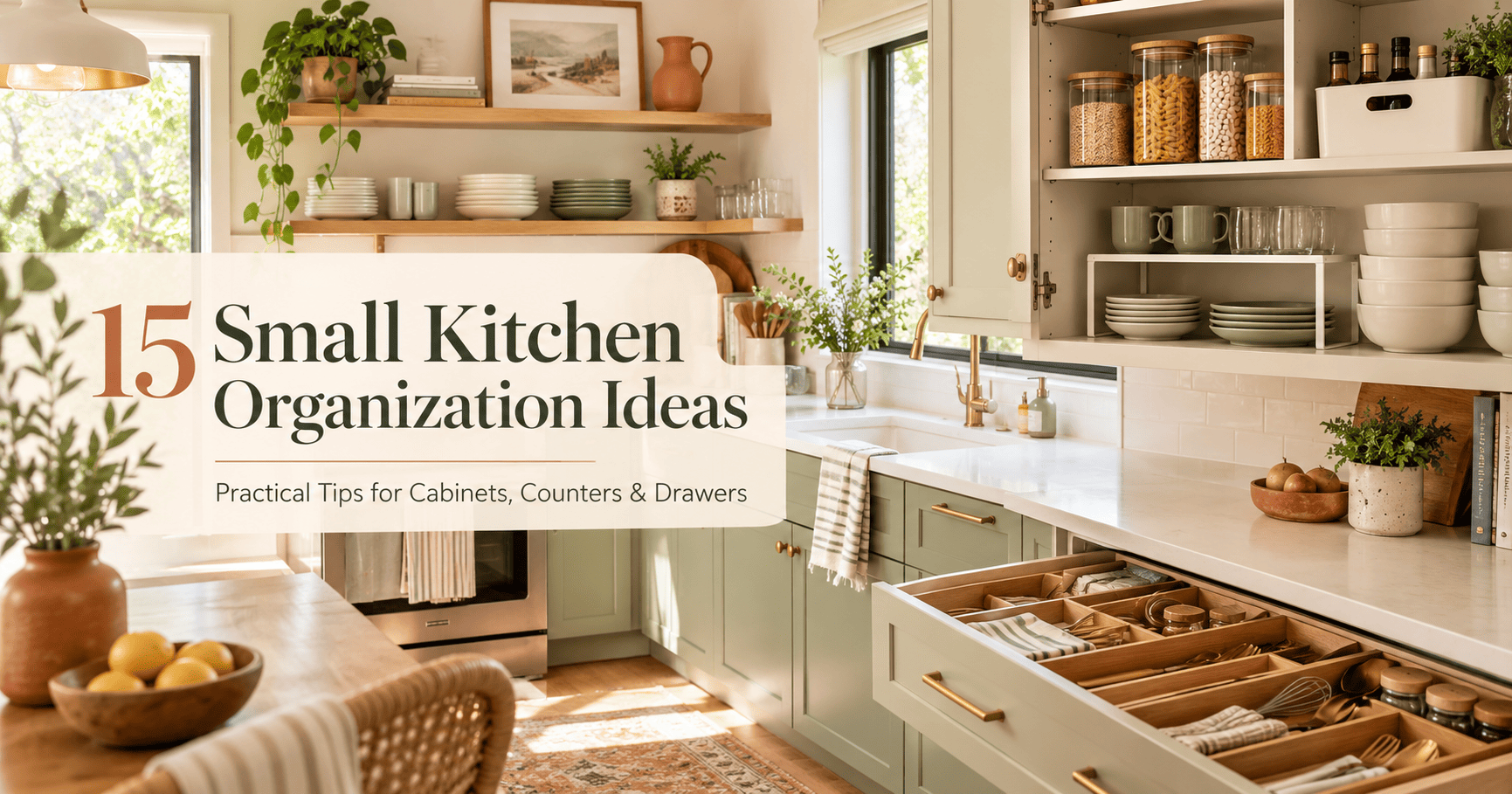
A small kitchen rarely needs more organizers. It needs clearer zones, easier access and enough open counter space to prepare food comfortably. These 15 practical ideas will help you reorganize what you own, use overlooked areas and avoid buying storage products that do not fit.
As an Amazon Associate I earn from qualifying purchases. This article contains a paid Amazon link.
If you want a broader room-by-room approach before choosing individual ideas or organizers, see our small kitchen organization guide for cabinets, counters, cookware, pantry storage, under-sink areas, and other compact-kitchen zones.
15 practical small kitchen organization ideas
1. Build a preparation zone
Keep your cutting board, mixing bowl and most-used prep tools close to your main work surface. Move occasional baking equipment elsewhere so you can start preparing food without rearranging the counter.
Try it without buying: Move the tools you already own before adding a tray or rack.
2. Keep cooking tools near the stove
Place the pans and utensils you use most within easy reach of the cooking area. Give them a cabinet or drawer rather than storing everything on the stovetop.
Check first: Keep storage and hanging items clear of burners and follow appliance clearance instructions.
3. Give everyday dishes the easiest shelf
Place daily plates and cups where you can reach them comfortably. Keep heavy items low and move occasional serving pieces to less convenient shelves.
Choose by frequency: A beautiful display is not useful if every breakfast requires moving other dishes.
4. Add a shelf riser where cabinet height is wasted
A shelf riser can separate short stacks of bowls or mugs into two accessible levels. It helps when there is empty height above the items you already store.
Before buying: Measure cabinet width, depth and height. Subtract the riser height to check that dishes will still fit above and below it.
5. Use an under-shelf basket for light items
A hanging basket can use a gap beneath an existing shelf for small, lightweight items. Keep it for a specific group rather than filling it with miscellaneous supplies.
Before buying: Check shelf thickness, the mounting lip, door clearance and the rated load. Skip it if it blocks the space below.
6. Divide one busy drawer
Separate cutlery, measuring tools and small accessories into groups. Start with the drawer you use every day, then remove duplicates before choosing dividers.
Before buying: Measure inside the drawer, including usable height. Confirm that adjustable dividers fit the internal length, not the outside cabinet width.
7. Bring deep-cabinet items forward with handled bins
Put related supplies in a bin you can pull out and place on the counter. This makes the back of a cabinet easier to use without unloading individual items.
Before buying: Check the narrowest opening between hinges. A bin that fits inside the cabinet can still be too wide to remove.
8. Compare a mounted pull-out for heavy daily use
A mounted pull-out can be worth considering when you regularly reach into a deep lower cabinet. Choose it for a clear storage task, such as accessing a small group of pans.
Before buying: Check mounting requirements, load rating, hinge clearance and whether the cabinet base can accept the installation. A loose bin is simpler if you want to avoid mounting hardware.
9. Separate pans from loose lids
Keep lids together so you can remove one pan without lifting an unstable stack. Start by assigning a small vertical section of a cabinet to lids.
Before buying: Measure lid diameter and handle depth. Leave enough room to pull the lid out, not just enough room to store it.
10. Create pantry zones around meals
Group breakfast foods, baking ingredients, snacks and dinner staples. Keep the labels broad enough that a different brand or package size still has a place.
Try it without buying: Use the existing shelves as zones before deciding which foods need a bin.
11. Contain small packages in one pantry bin
Loose packets and snack bars are easier to manage when they have a defined space. Keep frequently used items at the front and unopened duplicates behind them.
Before buying: Choose a bin you can lift comfortably. Several small bins may be easier to handle than one full-width container.
12. Decant only the dry goods that benefit
Transfer frequently purchased dry goods when a container makes storage and pouring easier. There is no need to replace every original package for a matching look.
Before buying: Compare capacity with the package you normally purchase. Keep date, ingredient and preparation information available after transferring food.
13. Reserve counter space for the daily routine
Move appliances you rarely use to a suitable cabinet or shelf. Keep a clear area for preparation instead of filling every available surface.
Try it without buying: Remove one rarely used item for a week and see whether the kitchen works better.
14. Group a coffee or tea station
Keep mugs, coffee or tea and the supplies you use together in one small area. A tray can help define the station, but it should leave enough room to prepare a drink.
Before buying: Measure the complete station, including appliance access and clearance. Avoid adding a tray that makes cleaning or refilling harder.
15. Use wall or gap storage only when it fits
A wall rail can hold selected tools, while a narrow cart can use an otherwise empty gap. Consider either only after the existing cabinets and drawers are working well.
Before buying: Check wall fixings or the cart footprint, handle projection and door swing. Keep walkways and appliance ventilation clear.
Which organizer fits your problem?
| Problem | Option to compare | When to skip it |
|---|---|---|
| Unused height above short dishes | Shelf riser | The remaining space above or below is too short. |
| Small items mix together | Drawer dividers | The drawer first needs fewer duplicates, not more compartments. |
| Supplies disappear at the back | Handled bin | The loaded bin will be awkward to lift or cannot pass the hinges. |
| Heavy items are difficult to reach | Mounted pull-out | The cabinet or installation requirements do not match. |
| An unused narrow gap | Slim cart | It would obstruct a door, walkway or appliance ventilation. |
Compare shelf organizers before you buy
Adjustable kitchen shelf organizers
Consider one if: You have short stacks of dishes and useful empty space above them.
Choose another option if: Tall bottles already fill the cabinet, the shelf is too shallow, or a riser would make everyday dishes harder to remove.
- Match the minimum and maximum width to your cabinet.
- Check depth and the usable clearance above and below the shelf.
- Compare the rated load with what you plan to store.
- Look at the feet, surface and cleaning instructions.
View on Amazon(paid link)
This link opens search results, not one tested or ranked product. Check the exact model, dimensions, seller, current price and return terms before ordering.
A five-minute weekly reset
Return supplies to their zones, put new groceries behind older duplicates and clear anything that has collected in the preparation area. If the same item never gets put away, change its storage location before buying another container.
Frequently asked questions
How do I organize a very small kitchen without buying anything?
What should I buy first?
Are adjustable organizers always a better fit?
This article explains storage approaches and purchase checks. It does not claim hands-on testing or name an overall winning product.