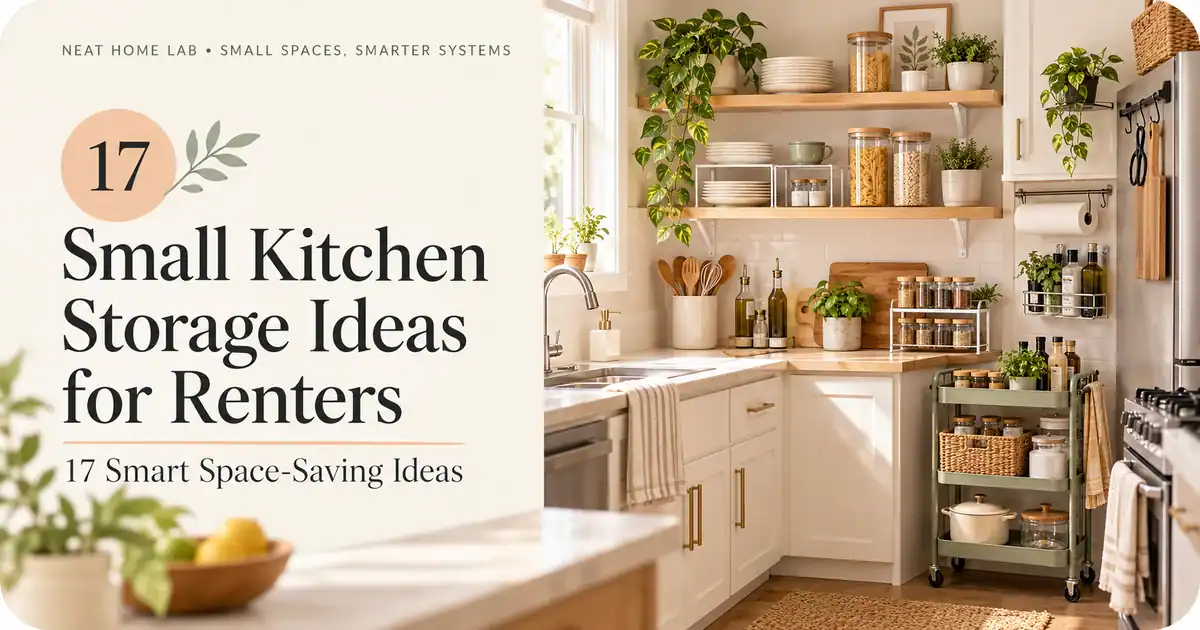
If you rent your home, a small kitchen can feel especially challenging. You need more storage, but drilling holes, replacing cabinets, or making permanent changes may not be allowed. The good news is that many of the best small kitchen storage ideas for renters require no remodeling at all.
With removable organizers, vertical storage, freestanding pieces, and smarter use of cabinets, counters, doors, and narrow gaps, you can create a kitchen that feels noticeably more functional without changing the space permanently.
Quick Takeaways
- Prioritize storage solutions that can move with you when your lease ends.
- Use vertical space before adding more items to countertops.
- Choose removable, freestanding, magnetic, tension-mounted, or over-the-door solutions whenever possible.
- Measure cabinets, doors, appliance gaps, and shelves before buying organizers.
- Keep everyday items within easy reach and move rarely used items out of prime kitchen zones.
Start Here: What Renters Should Avoid
Before adding storage, think about what you will need to remove when you eventually move out. The most useful renter-friendly kitchen upgrades improve function without creating repair work later.
- Check your lease before drilling into walls, cabinets, tile, or doors.
- Avoid adhesives on delicate painted surfaces unless the manufacturer says they are removable.
- Do not overload cabinet doors with heavy organizers.
- Avoid blocking vents, outlets, appliance ventilation, or plumbing access.
- Keep anything near the stove away from heat and open flames.
The goal is not to fit as much as possible into the kitchen. It is to make the space easier to use while keeping changes reversible.
17 Small Kitchen Storage Ideas for Renters
1. Use Removable Hooks Inside Cabinet Doors
The inside of a cabinet door is often completely unused. Lightweight removable hooks can create a convenient spot for measuring spoons, oven mitts, small utensils, reusable bags, or cleaning accessories.
Keep the items thin enough that the cabinet can still close comfortably. Before installing several hooks, test one in an inconspicuous area and follow the removal instructions carefully.
2. Add Freestanding Shelf Risers
Many kitchen cabinets have more vertical space than the dishes or pantry items stored inside them actually use. A freestanding shelf riser creates a second level without screws or permanent installation.
They work especially well for plates, bowls, mugs, canned foods, spices, and small pantry containers. Because they can be removed instantly, they are one of the simplest renter-friendly kitchen storage ideas.
3. Use Tension Rods for Vertical Storage
A small tension rod can sometimes turn an awkward cabinet into useful vertical storage. Depending on the cabinet layout, rods can help separate cutting boards, trays, baking sheets, pan lids, or lightweight cleaning supplies.
The key is using the rod as a divider rather than expecting it to support heavy cookware.
4. Add a Rolling Cart to an Empty Corner
A narrow rolling cart can function like a temporary mini pantry, beverage station, produce area, or extra prep-storage zone. Because it is freestanding and movable, it works especially well in rental kitchens where built-in storage is limited.
Use the top tier for frequently used items and the lower levels for backup supplies. Wheels also make it easier to move the cart when cleaning.
5. Store Pans and Lids Vertically
Stacking frying pans and lids directly on top of one another often creates a frustrating pile. Vertical storage makes individual pieces easier to reach and can reduce the amount of cabinet space they consume.
Use removable rack-style dividers or freestanding cookware organizers rather than permanent hardware. If cookware is one of your biggest storage problems, see our guide to the best pan and lid organizers for small kitchens.
6. Use the Tops of Cabinets Wisely
If your rental kitchen has open space above the upper cabinets, it can provide useful storage for items you do not need every day.
Good candidates include serving pieces, seasonal cookware, rarely used appliances, or labeled baskets. Avoid turning the area into random overflow. Group similar items together so the space still looks intentional.
7. Add Removable Under-Shelf Baskets
Clip-on or slide-on under-shelf baskets can capture unused space underneath cabinet shelves. They are especially useful for lightweight items such as wraps, napkins, small towels, tea packets, food-storage lids, or snack bags.
Before using one, check both the thickness of the shelf and the clearance below it so the cabinet doors still close properly.
8. Turn the Side of the Refrigerator Into Storage
If one side of your refrigerator is exposed, magnetic storage can add useful space without drilling. Magnetic racks can hold lightweight spices, kitchen towels, paper goods, notes, or frequently used small items.
Not every refrigerator surface is equally magnetic, so test the location first. Also keep storage away from ventilation areas and make sure nothing interferes with the refrigerator door.
9. Create Countertop Zones
A small counter becomes cluttered quickly when unrelated objects are scattered across it. Instead of treating the entire countertop as one storage area, divide it into small functional zones.
You might have one coffee zone, one cooking zone, and one small prep zone. Use a tray or compact organizer to visually contain each group.
For more ideas, see 15 Small Kitchen Counter Organization Ideas for a Clutter-Free Space.
10. Use Stackable Bins Inside Deep Cabinets
Deep cabinets can hide food and kitchen supplies behind one another. Stackable bins help create smaller categories and make it easier to pull items forward instead of reaching blindly into the back.
Keep frequently used items toward the front and place backup supplies deeper inside. Transparent or clearly labeled bins can make the system easier to maintain.
If deep cabinets are a recurring problem, our guide on how to organize deep kitchen cabinets without wasting space goes into more detail.
11. Use an Over-the-Door Organizer
A pantry, utility, or kitchen door can provide storage without using floor or counter space. Over-the-door organizers can hold lightweight pantry items, cleaning supplies, wraps, reusable bags, or kitchen accessories.
Check the thickness of the hooks and the clearance above the door before buying. A bulky organizer can prevent some doors from closing smoothly.
You can also compare different styles in our guide to over-the-door organizers for small spaces.
12. Create a Portable Coffee or Breakfast Station
If coffee supplies, mugs, cereal, sweeteners, and breakfast essentials are spread throughout the kitchen, gathering them into one movable station can free up multiple cabinets and make mornings easier.
A tray, basket, or rolling cart works well because the entire setup can be moved when you need additional counter space.
13. Use Magnetic Storage Without Drilling
Magnetic hooks, clips, racks, and holders can create storage on compatible metal surfaces without screws. They are useful for small tools, towels, notes, lightweight baskets, or frequently used accessories.
Avoid hanging heavy or breakable items unless the organizer is specifically designed for the weight involved.
14. Add Slim Rolling Storage Beside Appliances
Narrow gaps beside a refrigerator, freestanding cabinet, or other appliance can sometimes accommodate a slim rolling cart.
This type of storage works best for lightweight pantry goods, bottles, wraps, or backup supplies. Measure carefully because even a small difference in width can determine whether the cart moves freely.
15. Use Removable Drawer Dividers
Drawer dividers are one of the easiest ways to improve storage without altering the kitchen. Adjustable or tension-style dividers can separate utensils, cooking tools, food-storage accessories, and smaller kitchen items.
Instead of creating a separate compartment for every object, organize by function. A simple system is usually easier to maintain than an overly complicated one.
16. Move Rarely Used Items Out of Prime Kitchen Space
Not everything you own needs to stay in the easiest-to-reach kitchen cabinet. Large serving trays, seasonal baking supplies, specialty appliances, and rarely used entertaining pieces can often live elsewhere.
Moving them to a nearby closet, dining-room cabinet, storage shelf, or labeled container can free valuable kitchen space for things you use every week.
17. Create a Renter-Friendly Pantry Station
If your rental does not have a real pantry, create one using a freestanding bookcase, rolling cart, wire shelving unit, or compact cabinet that can move with you.
Group foods into practical categories such as breakfast, snacks, baking, canned goods, and meal staples. Keep heavier products on lower shelves for better stability.
The advantage of a freestanding pantry is that it adds useful storage without asking the kitchen itself to do more than it was designed to handle.
Renter-Friendly Storage Ideas That Require Zero Installation
If you want to avoid adhesives, drilling, and mounting completely, start with solutions that simply sit in place.
- Freestanding shelf risers
- Rolling carts
- Stackable pantry bins
- Countertop trays
- Cookware racks
- Adjustable drawer dividers
- Freestanding pantry shelves
- Portable coffee stations
These are especially useful if you move frequently because they can usually be reused in a different apartment or kitchen.
Measure Before You Buy
A storage product can look compact online and still be too large for your kitchen. Measuring first prevents one of the most common small-space organization mistakes.
- Cabinet interior width, depth, and height
- Distance between cabinet shelves
- Drawer width, depth, and interior height
- Door thickness for over-the-door organizers
- Clearance around hinges
- Width of gaps beside appliances
- Counter depth and available prep space
- Space above cabinets
Remember that the exterior dimensions of a cabinet are not the same as the usable interior dimensions. Hinges, frames, plumbing, handles, and shelf supports can reduce available space.
Renter-Friendly Kitchen Storage Checklist
Before adding an organizer, ask yourself these questions:
- Is it reversible? Can I remove it without damaging the kitchen?
- Does it solve a real problem? Avoid adding organizers simply because there is an empty space.
- Will it fit? Measure before ordering.
- Can I reach the items easily? Storage should improve access, not just increase capacity.
- Can it move with me? Portable pieces often provide more value to renters.
- Does it keep counters usable? Preserve enough open workspace for food preparation.
If your kitchen feels crowded overall, start with our broader small kitchen organization guide for practical ideas covering cabinets, counters, cookware, pantry storage, and other tight kitchen spaces.
Common Small-Kitchen Storage Mistakes
Buying Organizers Before Decluttering
Organizers cannot compensate for keeping too many unused items. Remove duplicates, expired pantry goods, and kitchen tools you no longer use before adding storage products.
Using Every Available Surface
Empty space is useful. A counter covered with racks, jars, hooks, and containers may technically hold more items while making the kitchen harder to cook in.
Storing Heavy Items Too High
Large cookware, appliances, and heavy containers are safer and easier to access on lower shelves.
Ignoring the Way You Actually Cook
Your best storage system should reflect your habits. If you make coffee every morning, coffee supplies deserve convenient space. If you rarely bake, baking tools do not need prime cabinet real estate.
Frequently Asked Questions
How can renters add kitchen storage without drilling?
Use freestanding shelf risers, rolling carts, stackable bins, tension-based organizers, magnetic storage, removable hooks, drawer dividers, and over-the-door solutions where appropriate.
What is the best way to organize a very small rental kitchen?
Start by decluttering, then organize according to how frequently items are used. Use vertical cabinet space, cabinet doors, narrow gaps, drawers, and movable storage before sacrificing countertop workspace.
Can I use adhesive hooks in a rental?
Possibly, but it depends on the surface, product, and lease terms. Test removable adhesive products in an inconspicuous area and follow the manufacturer’s installation and removal directions carefully.
How do I create pantry storage in an apartment without a pantry?
A narrow freestanding shelf, rolling cart, small bookcase, or movable cabinet can become a renter-friendly pantry station. Keep categories simple and place heavier items on lower shelves.
How can I make a small kitchen look less cluttered?
Keep frequently used items grouped into clear zones, move rarely used items elsewhere, reduce duplicates, maintain some open countertop space, and avoid filling every visible surface with storage products.
Final Thoughts
A rental kitchen does not need a renovation to become easier to use. The most effective small kitchen storage ideas for renters focus on flexibility: removable organizers, freestanding storage, vertical space, better cabinet zones, and portable solutions that can move with you.
Start with the area that causes the most frustration rather than trying to reorganize everything at once. One better cabinet, one clearer counter, or one well-planned rolling cart can make a small kitchen feel significantly more functional.