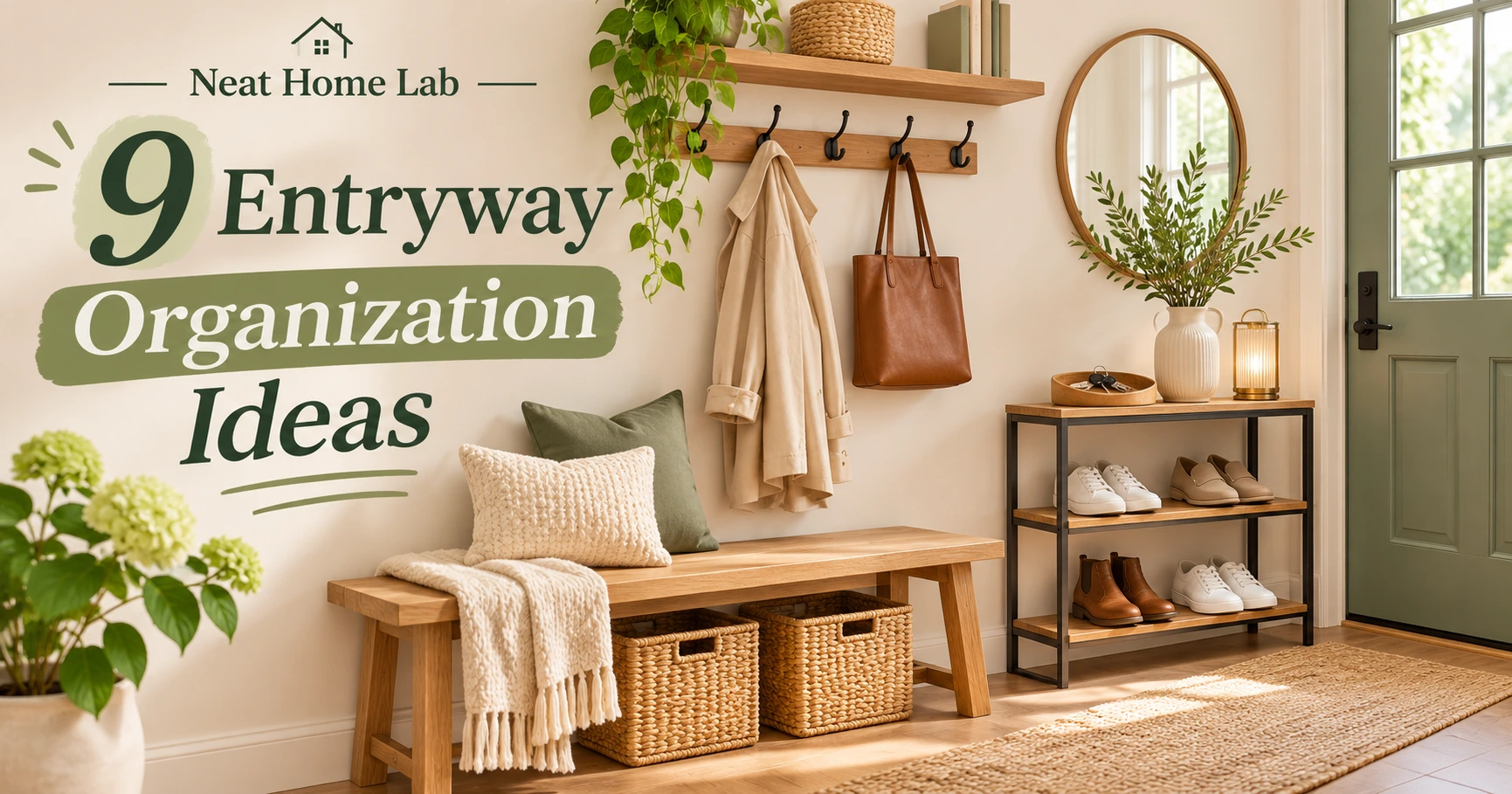
The entryway is where daily clutter begins and ends. These 9 entryway organization ideas create practical homes for shoes, bags, keys, mail, coats, and other everyday essentials without making the entrance feel crowded.
You do not need a large mudroom or expensive built-ins. Start with the items that repeatedly collect near the door, then create simple storage zones around your actual routine.
Keep these entryway organization ideas handy for your next decluttering or small-space storage project.
Before You Begin: Identify What Collects by the Door
- Remove items that do not need to live in the entryway.
- Keep only frequently used shoes, bags, and outerwear near the door.
- Create predictable homes for keys, wallets, and other small essentials.
- Use vertical space when floor space is limited.
- Measure walking clearance, wall space, and door movement before buying organizers.
9 Entryway Organization Ideas for a Tidy and Welcoming Home
1. Create a Drop Zone for Everyday Essentials
Give keys, wallets, sunglasses, and other small daily items one consistent location near the entrance. A simple tray, drawer, bowl, or small shelf can prevent these items from spreading across nearby surfaces.
2. Use Wall Hooks for Bags and Coats
Hooks can use vertical space to keep frequently used coats, bags, hats, or accessories off chairs and floors. They are especially useful when there is not enough room for a large freestanding organizer.
3. Give Shoes a Clear Limit
Decide how many pairs actually need to stay near the entrance. Keeping only frequently worn shoes in the entryway can reduce clutter before you add any new storage.
4. Use a Narrow Shoe Rack When Floor Space Is Limited
If shoes still need a dedicated organizer, a narrow rack can keep pairs together without occupying as much floor depth as a larger cabinet.
5. Separate Mail From General Entryway Clutter
Mail, receipts, flyers, and paperwork can quickly turn an entryway surface into a permanent pile. Give incoming paper one defined location and regularly remove anything that no longer needs attention.
6. Add a Small Seat if Space Allows
A bench or stool can make putting on and removing shoes easier. Some benches also provide storage underneath, but the extra function is useful only when the furniture fits comfortably within the entrance.
7. Give Each Person a Simple Zone
In a shared household, assigning a hook, basket, shelf section, or other small area to each person can make daily items easier to return to the correct place.
8. Use Baskets for Small Seasonal Accessories
Small accessories such as hats, gloves, scarves, or other seasonal items can be difficult to keep organized individually. A basket or bin can contain the category while keeping frequently used pieces accessible.
9. Protect the Walking Path
An organized entryway still needs to function as an entrance. Keep the main walking path clear and avoid adding storage that makes it difficult to open the door, carry groceries, or move comfortably through the space.
Choose the Right Storage Solution for Your Entryway
| Entryway Problem | Option to Consider | Check Before Using It |
|---|---|---|
| Keys and small items get lost | Tray, bowl, or small shelf | Place it where you naturally enter and leave. |
| Bags and coats collect on furniture | Wall hooks | Check wall type, installation, load guidance, and clearance. |
| Shoes spread across the floor | Narrow shoe rack | Measure footwear size, rack depth, and walking space. |
| Mail creates surface clutter | Small paper landing zone | Process the contents regularly instead of allowing them to accumulate. |
| You need somewhere to put on shoes | Bench or small stool | Make sure enough walking clearance remains. |
| Small seasonal accessories get scattered | Basket or bin | Keep each container limited to a clear category. |
Entryway Storage Buying Checklist
Before purchasing an entryway organizer, identify the specific clutter problem it needs to solve. The best storage should make the entrance easier to use without reducing important walking space.
- Wall hooks
- Narrow shoe racks
- Key trays or small-item organizers
- Mail organizers
- Storage benches or compact stools
- Measure available wall width and floor space.
- Check the full swing of the entry door.
- Protect enough clearance for comfortable movement.
- Check organizer depth as well as width and height.
- For wall-mounted products, review installation requirements and load guidance.
- Consider how easily everyday items can be returned to the organizer.
Affiliate disclosure: As an Amazon Associate I earn from qualifying purchases. The Amazon link below is a paid affiliate link.
Compare Wall-Mounted Entryway Hooks
Wall-mounted hooks can use vertical space to create an accessible home for coats, bags, hats, and other frequently used items while keeping more of the floor clear.
Consider them if: Your entryway has usable wall space and everyday bags or outerwear regularly collect on chairs, furniture, or the floor.
Choose another option if: You cannot install the hooks appropriately, the wall location interferes with the door, or hanging items would make a narrow walkway feel crowded.
- Measure the available wall area.
- Check the wall material and required mounting method.
- Review manufacturer installation instructions and load guidance.
- Allow enough spacing for the items you intend to hang.
- Verify the current Amazon listing and specifications before purchasing.
View on Amazon(paid link)
This link opens Amazon search results rather than one tested or ranked product. Check the exact listing, dimensions, materials, installation requirements, current price, seller information, and return terms before ordering.
A Simple Entryway Reset Routine
Return keys and small essentials to the drop zone, hang bags and outerwear, move extra shoes to their regular storage location, process incoming paper, and remove anything that belongs elsewhere in the home. A short routine can prevent the entrance from becoming a permanent collection point. For a room-by-room system, explore our home organization ideas.
Frequently Asked Questions
How do I organize a small entryway?
Keep only daily-use items near the door, use vertical storage where appropriate, limit the number of shoes and coats in the space, create a small landing zone for essentials, and protect the main walking path.
How can I organize an entryway without buying anything?
Remove extra shoes and outerwear, reuse a bowl or tray for keys, assign existing hooks or shelf areas to household members, and create a temporary paper zone using something you already own.
What is the most useful entryway storage?
It depends on the source of the clutter. Hooks can help with bags and coats, a tray can contain small essentials, and a shoe zone can keep footwear out of the walking path. Start with the problem that occurs most often in your home.
How do I organize an entryway with no closet?
Limit what stays near the door and use available wall space carefully for frequently used outerwear and bags. A narrow shoe zone and a small landing place for essentials can provide basic entryway function without a closet.
What should I measure before buying an entryway organizer?
Measure usable width, depth, and height as well as door movement and the walking path. For wall-mounted storage, also consider the wall material, installation requirements, spacing, and manufacturer load guidance.
These ideas are intended to improve entryway organization using solutions appropriate for your own space and routine. The Amazon suggestion is a product category to compare and does not represent hands-on testing or a ranked winner. Always verify the current listing, dimensions, materials, installation requirements, specifications, seller information, price, and return terms before purchasing.