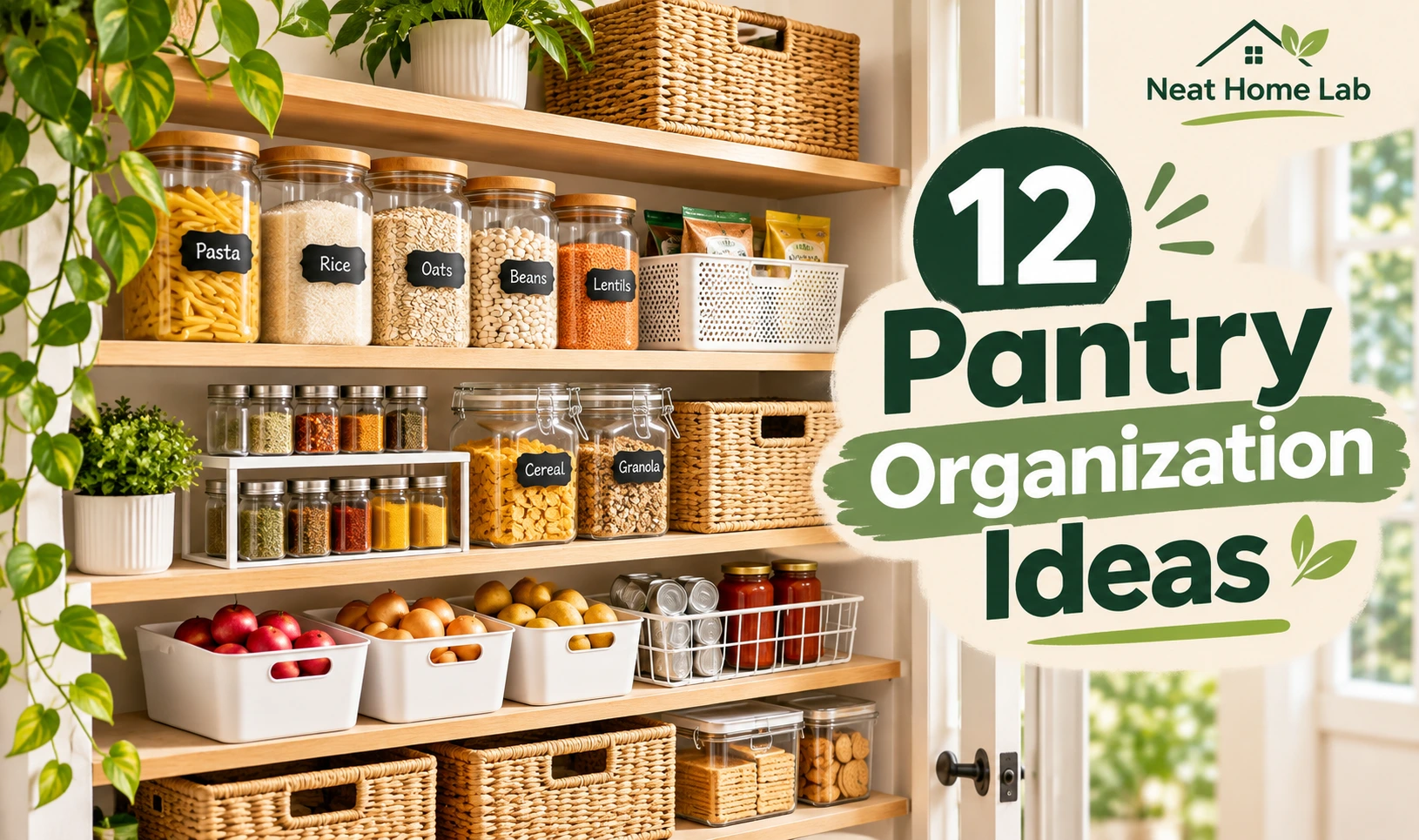
You do not need matching containers or a complete pantry makeover. Start by improving visibility and access, then add organizers only where they solve a specific storage problem. If your shelves are especially tight, see our small pantry organization ideas for space-specific solutions.
Keep these pantry organization ideas handy for your next kitchen reset or storage project.
Before You Begin: Organize What You Already Have
- Remove expired or unwanted food before adding organizers.
- Group similar foods so you can see what you already own.
- Keep frequently used items in the easiest-to-reach locations.
- Measure shelf width, depth, and height before buying storage products.
- Use containers only when they improve visibility or access.
12 Pantry Organization Ideas for Better Storage and Less Clutter
1. Group Food by Category
Create broad zones such as breakfast, snacks, baking, pasta and grains, canned foods, and cooking ingredients. Categories make it easier to find what you need and see when something is running low.
2. Keep Everyday Foods Easy to Reach
Place frequently used foods where they are easy to see and reach. Reserve higher, lower, or less convenient shelves for occasional ingredients and backup supplies.
3. Bring Small Packages Forward
Snack bars, seasoning packets, small bags, and similar products can disappear behind larger containers. Keep these items together and near the front so they remain visible.
4. Use Shelf Risers for Short Items
When pantry shelves are tall, cans and small jars may use only part of the available vertical space. A shelf riser can create another visible level without requiring a permanent shelf installation.
5. Use Turntables in Awkward Corners
A turntable can make bottles, jars, condiments, and other small products easier to reach in deep corners where items tend to disappear behind one another.
6. Keep Cans Visible
Arrange canned foods so labels are easy to see and similar products stay together. If you keep many cans, using different shelf levels can make the back row easier to identify.
7. Label Only What Needs It
Labels are useful when containers are opaque, several categories look similar, or multiple people use the pantry. Clear containers and obvious categories may not need labels at all.
8. Create a Restock Zone
Keep duplicate products together so you can quickly see whether you already have a backup. This can reduce accidental duplicate purchases and make grocery planning easier.
9. Organize Deep Shelves in Rows
Deep pantry shelves can hide products. Keep similar foods together from front to back so you know what is behind the first row instead of mixing unrelated items throughout the shelf. The same approach works for organizing deep kitchen cabinets.
10. Store Heavy Items Lower
Heavier pantry items are generally easier to handle when they are not stored overhead. Lighter and less frequently used products can occupy higher shelves when appropriate.
11. Keep Open Packages Contained
Open snack bags, baking supplies, and loose packages can quickly spread across a shelf. Give them a defined area so they remain visible and easier to manage.
12. Leave Some Empty Space
A pantry packed tightly from edge to edge is difficult to maintain. Leaving some open space gives you room for incoming groceries and makes existing categories easier to see.
Which Pantry Storage Solution Fits Your Problem?
| Storage Problem | Option to Consider | Check Before Using It |
|---|---|---|
| Small packages disappear | Shallow bins | Make sure packages remain visible and easy to remove. |
| Tall shelves waste vertical space | Shelf risers | Measure width, depth, height, and usable clearance. |
| Deep corners are difficult to reach | Turntable | Confirm enough space for unrestricted rotation. |
| Cans hide behind one another | Riser or can organizer | Make sure all rows remain visible and accessible. |
| You accidentally buy duplicates | Restock zone | Keep backups together and check them before shopping. |
Pantry Organizer Buying Checklist
Before purchasing pantry organizers, identify the exact problem you are trying to solve. A useful organizer should improve visibility, access, or usable shelf space rather than simply making the pantry look more uniform.
- Clear or open storage bins
- Shelf risers
- Can organizers
- Turntables
- Food storage labels
- Measure usable shelf width.
- Measure shelf depth.
- Check vertical clearance.
- Consider door and shelf-support clearance.
- Check the organizer’s outside dimensions and usable interior space.
- Review materials, cleaning instructions, stability, and assembly requirements.
Affiliate disclosure: As an Amazon Associate I earn from qualifying purchases. The Amazon link below is a paid affiliate link.
Compare Pantry Shelf Risers
Shelf risers can create another visible level for cans, jars, and small packages when a pantry shelf has unused vertical space.
Consider them if: Your shelves are tall enough that shorter products leave unused space above them or items in the back row are difficult to see.
Skip them if: Your shelves have limited vertical clearance or adding another level would make products harder to remove.
- Measure shelf width, depth, and height.
- Compare the riser dimensions with the products you plan to store.
- Check materials, stability, cleaning instructions, and assembly requirements.
- Verify the current Amazon listing and product specifications before purchasing.
View on Amazon(paid link)
This link opens Amazon search results rather than one tested or ranked product. Check the exact listing, dimensions, materials, current price, seller information, and return terms before ordering.
A Simple Pantry Reset Routine
Every so often, return misplaced foods to their categories, bring older products forward, check for expired items, and review backup supplies before grocery shopping. A short reset can keep the pantry functional without requiring another complete reorganization.
Frequently Asked Questions
What is the best way to organize a pantry?
Start by removing expired or unwanted foods, group similar products into broad categories, keep frequently used foods easy to reach, and arrange shelves so you can see what you already own.
How can I organize a pantry without buying anything?
Group foods by category, move frequently used products to accessible shelves, create a backup zone, bring older products forward, and reuse suitable boxes or containers you already own.
How do I organize a small pantry?
Prioritize frequently used foods, avoid unnecessary duplicates, use available shelf height when practical, and keep categories simple enough that the system is easy to maintain.
Are clear pantry containers worth it?
They can be useful when they improve visibility or make a difficult category easier to manage, but they are not necessary for every pantry or every type of food.
What should I measure before buying pantry organizers?
Measure usable shelf width, depth, and height. Also consider shelf supports, doors, nearby items, and the space required to comfortably insert and remove the organizer.
These ideas are intended to improve pantry visibility, access, and storage using solutions appropriate for your own space. The Amazon suggestion is a product category to compare and does not represent hands-on testing or a ranked winner. Always verify the current listing, dimensions, materials, specifications, seller information, price, and return terms before purchasing.