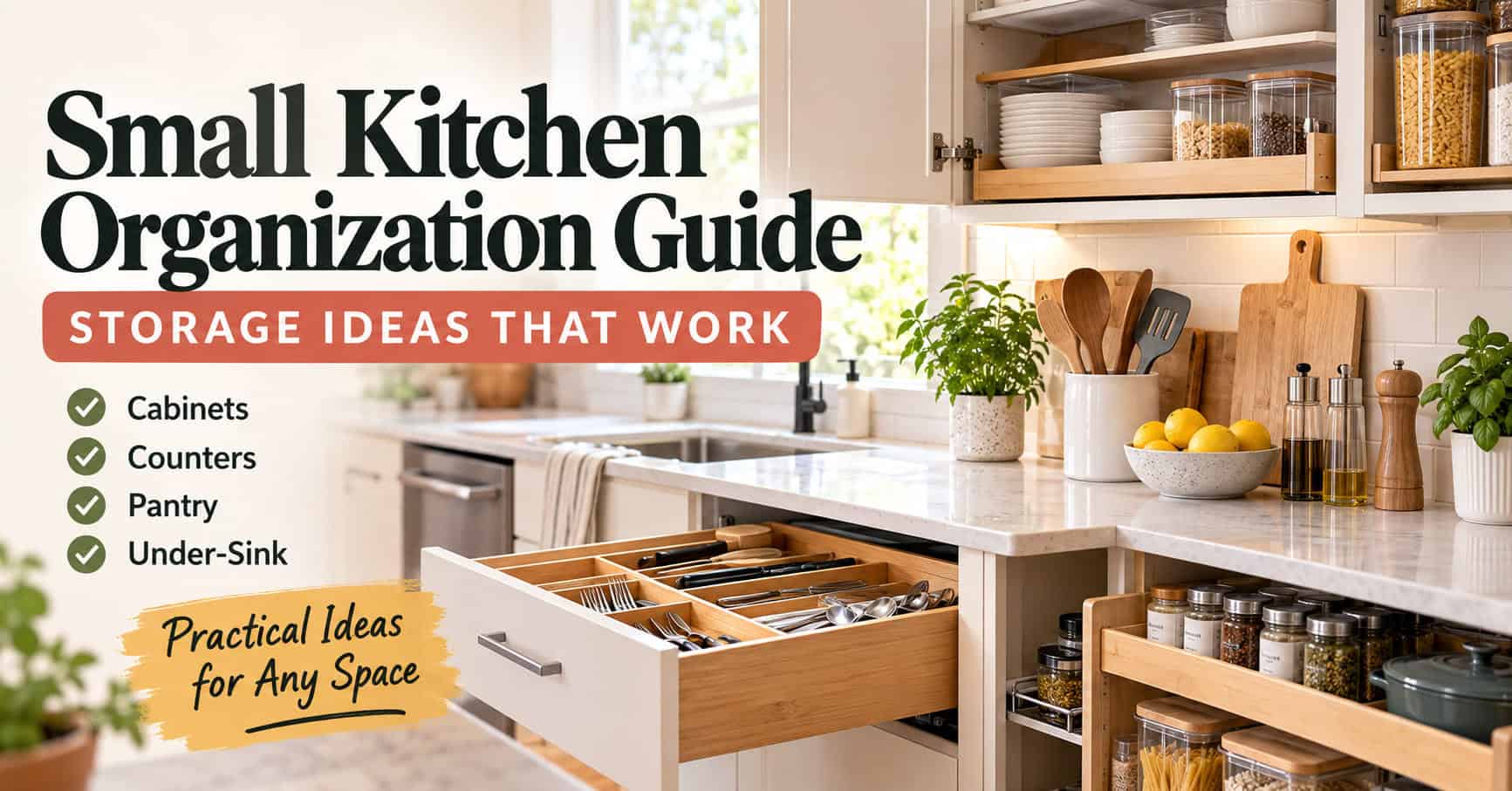
Organizing a small kitchen is less about adding more storage and more about making the space you already have easier to use. Cabinets can become difficult to reach, counters collect everyday clutter, cookware gets stacked awkwardly, and renters often have to work around layouts they cannot permanently change.
This small kitchen organization guide brings together practical storage strategies for cabinets, counters, cookware, pantry areas, under-sink storage, and rental kitchens. Use it as a starting point, then follow the more detailed guides for the specific problem you want to solve.
Quick Takeaways
- Start with the storage problem that affects your daily routine most.
- Use cabinet depth and vertical space before adding more furniture.
- Keep frequently used items within easy reach and occasional items farther back or higher up.
- Measure cabinets, doors, shelves, and organizers before buying anything.
- Use specialized organizers only when they solve a specific access or space problem.
Where to Start With Small Kitchen Organization
The easiest way to improve a small kitchen is to stop thinking about the entire room at once. Instead, identify the one area that causes the most friction during your normal routine.
If you constantly move things off the counter, start with counter organization. If you cannot reach items in the back of cabinets, improve cabinet access first. If cookware is stacked in unstable piles, focus on pots, pans, and lids before reorganizing anything else.
Start here: choose the area that frustrates you most, remove what does not belong there, group similar items, and only then decide whether an organizer is necessary.
For a full step-by-step approach, read How to Organize a Small Kitchen Without More Cabinets. It explains how to improve storage using the cabinets, walls, drawers, and surfaces you already have.
How to Organize Small Kitchen Cabinets
Cabinets often hold more than they appear to because much of their usable space is vertical or hidden toward the back. The goal is not simply to fit more inside. You want to make stored items easier to see, reach, and return to their place.
Use cabinet depth carefully
Deep cabinets can hold bulky cookware, appliances, food containers, and pantry supplies, but items in the back can easily disappear. Avoid creating several loose rows of unrelated objects.
Instead, group items by use and consider bins, pull-out organizers, or zones that allow you to access the back without unloading the entire shelf.
Our detailed guide to organizing deep kitchen cabinets without wasting space covers visibility, access, shelf depth, and common mistakes.
Create easier access with pull-out storage
Pull-out organizers can be especially useful in lower cabinets where bending and reaching into the back is inconvenient. They can work well for cookware, cleaning supplies, pantry items, or frequently used kitchen essentials when the cabinet dimensions allow.
If you are considering one, compare the available styles in Best Pull-Out Cabinet Organizers for Small Kitchens: 9 Picks.
Use vertical space
If a cabinet has a large amount of empty height above short items, shelf risers or stackable storage may help create an additional level. This works particularly well for plates, bowls, mugs, cans, jars, or short pantry containers.
Do not add a shelf riser simply because space is available. Make sure the second level actually improves access instead of creating another crowded layer.
How to Keep Small Kitchen Counters Organized
Counter space is often the most valuable surface in a small kitchen. A counter can become cluttered quickly because it is the easiest place to put appliances, mail, groceries, utensils, bottles, and items waiting to be put away.
Keep only daily-use items visible
Start by identifying what you use almost every day. A coffee maker or toaster may deserve permanent counter space. An appliance used once every few weeks usually does not.
Create small functional zones
Group items according to the task they support. For example, coffee supplies can stay near the coffee maker, cooking utensils near the stove, and dishwashing supplies near the sink.
This reduces the number of unrelated objects spread across the counter and makes the space easier to reset.
For more ideas, see 15 Small Kitchen Counter Organization Ideas for a Clutter-Free Space.
How to Organize Pots, Pans, and Lids
Cookware is one of the most difficult categories to organize in a small kitchen because pieces are large, heavy, and different shapes. Lids create an additional problem because they do not always stack neatly with the cookware they belong to.
Avoid unstable cookware towers
Stacking several pots and pans inside each other can save space, but a very tall stack becomes inconvenient when you regularly need the item at the bottom.
Try dividing cookware into smaller groups based on how often you use it. Everyday frying pans and saucepans should be easier to access than specialty cookware.
Store lids separately when necessary
Lids can often be stored vertically using dividers, racks, or a dedicated cabinet section. This can make them easier to identify without lifting several pieces of cookware.
For a complete walkthrough, read How to Organize Pots and Pans in a Small Kitchen.
If you are looking specifically for organizer options, compare 9 Pan and Lid Organizers for Small Kitchens.
Small Pantry and Food Storage Organization
Food storage becomes difficult when small packages, jars, cans, snacks, and backup groceries share the same limited shelves. A useful pantry system should make it easy to see what you have before buying more.
Create broad pantry zones
Instead of giving every product its own category, use broad zones such as breakfast, snacks, baking, canned goods, dinner ingredients, and backstock.
Use the right organizer for the problem
Clear bins are useful for loose packages. Shelf risers can improve visibility for cans and jars. Turntables can make corners easier to access. Baskets can reduce visual clutter from irregular packages.
See 15 Small Pantry Organization Ideas That Make the Most of Every Inch for a more detailed system.
Small Kitchen Storage Ideas for Renters
Renters often need storage solutions that do not involve drilling, remodeling, replacing cabinets, or making permanent changes.
Use removable and freestanding storage first
Consider movable carts, removable hooks, tension-based organizers, freestanding shelves, cabinet inserts, and other solutions that can leave with you when you move.
Use doors and overlooked vertical space
Cabinet doors, pantry doors, refrigerator sides, and unused wall-adjacent spaces can sometimes provide additional storage without changing the structure of the kitchen.
For more ideas designed specifically around rental limitations, see 17 Small Kitchen Storage Ideas for Renters.
How to Organize Under the Kitchen Sink
The cabinet under the sink is difficult because pipes, the drain, garbage disposal components, and cleaning supplies all compete for space.
Work around plumbing instead of fighting it
Measure the usable width, depth, and height on each side of the plumbing before choosing an organizer. An organizer that fits the cabinet opening may still interfere with pipes farther inside.
Keep frequently used cleaning supplies accessible
Everyday products should be easy to remove without unloading the cabinet. Backup supplies can stay farther back when appropriate.
If you are shopping for an organizer, compare 9 Under-Sink Organizers That Work Around Pipes and Disposals.
Use Doors for Extra Storage
A door can provide useful vertical storage when floor and cabinet space are limited. Over-the-door organizers can work for pantry items, cleaning supplies, kitchen towels, wraps, lightweight containers, and other small essentials.
Before using one, check the door thickness, hinge clearance, organizer depth, and whether stored items will hit shelves when the door closes.
See Best Over-the-Door Organizers for Small Spaces: 9 Picks for different storage formats and use cases.
Small Kitchen Organizer Buying Guides
Not every kitchen problem requires a product, but the right organizer can improve access when a cabinet, shelf, or storage zone has a specific limitation. These guides focus on choosing organizers according to the space and problem they are designed to solve.
| Storage Problem | Guide |
|---|---|
| Hard-to-reach lower cabinets | Pull-Out Cabinet Organizers |
| Messy cookware and lids | Pan and Lid Organizers |
| Crowded sink cabinet | Under-Sink Organizers |
| Unused door space | Over-the-Door Organizers |
Common Small Kitchen Organization Mistakes
Buying organizers before measuring
Measure the actual usable width, depth, and height of the storage area. Hinges, plumbing, cabinet frames, shelf supports, and door clearance can reduce the space available.
Trying to maximize every inch
A cabinet packed completely full may technically hold more, but it can become harder to use. Leave enough room to remove and return items without rearranging everything.
Keeping rarely used items in prime storage zones
The easiest cabinets, drawers, and counter areas should support your everyday routine. Move occasional items to less convenient storage locations when possible.
Using too many different organizers
Storage tools should make a system simpler. Too many specialized containers can create more boundaries and maintenance than the kitchen needs.
Organizing before reducing duplicates
Check for duplicate gadgets, unused cookware, expired pantry food, empty containers, and items that belong elsewhere before adding storage products.
Simple Small Kitchen Organization Plan
- Choose one problem area. Start with cabinets, counters, cookware, pantry storage, or under-sink storage.
- Remove unrelated and unnecessary items.
- Group what remains by function or frequency of use.
- Measure the available space.
- Use existing shelves, doors, walls, and vertical space first.
- Add an organizer only if it improves access or visibility.
- Leave enough open space to make the system easy to maintain.
The main goal: your kitchen does not need to hold the maximum possible number of items. It needs to make the items you actually use easy to find, reach, and put away.
Frequently Asked Questions
How do I organize a very small kitchen?
Start with one area at a time. Remove items you rarely use, keep everyday essentials in the easiest locations, use vertical and door space where practical, and choose organizers only for specific storage problems.
How can I organize a small kitchen without buying anything?
Remove duplicates, group similar items, move frequently used items closer to where they are used, create broad pantry zones, separate everyday cookware from occasional pieces, and clear unnecessary objects from the counters.
What should I organize first in a small kitchen?
Start with the area that causes the most inconvenience during your normal routine. For many kitchens that may be the counters, cookware cabinet, pantry, or a deep lower cabinet.
How do I make deep kitchen cabinets easier to use?
Group similar items, avoid loose rows that hide objects in the back, and consider bins or pull-out systems when they improve access. Keep frequently used items toward the front whenever possible.
How do I organize pots and pans in a small cabinet?
Divide cookware into smaller groups, keep everyday pieces easiest to reach, avoid very tall unstable stacks, and consider storing lids vertically when cabinet dimensions allow.
Are kitchen organizers worth buying?
They can be useful when they solve a specific problem such as inaccessible cabinet depth, wasted vertical space, difficult lid storage, or awkward plumbing. Measure first and avoid buying organizers simply to fill empty space.
Final Thoughts
A small kitchen becomes easier to use when every storage decision supports the way you actually cook, clean, and move through the room. You do not need to reorganize everything at once or fill every cabinet with containers.
Start with the biggest frustration, improve access and visibility, measure before adding organizers, and build the system one area at a time.
For the broadest next step, begin with How to Organize a Small Kitchen Without More Cabinets, then use the specialized guides above whenever you need help with cookware, cabinets, counters, pantry storage, renter-friendly solutions, or under-sink organization.